How Indie Authors Can Reach Readers Without Self-Promotion
Marketeers say the key to promoting a book is to take off your writer's hat. But, argues Orna Ross, that…

Marketeers say the key to promoting a book is to take off your writer's hat. But, argues Orna Ross, that…

Sometimes an author needs a lot of hand holding …
How do you choose the right copyeditor for your book? And which kind of editor do you need anyway? ALLi member, indie author and ace copyeditor herself, CS Lakin, points the way.
Getting a personal recommendation of an editor from a trusted author friend is usually the best way to go. But even in those instances, you may find one author’s choice in an editor may not be your best choice.
Personality comes into play, and sometimes the fit just isn’t right. Sometimes an author needs a lot of communication and handholding, and some editors are all business, so see how the editor responds to your query and questions.
You should be able to tell by her personality and responsiveness to you if it feels like a good fit. An editor that doesn’t

The great Max Perkins. But traditional publishing contracts won't suit indie authors.
As more and more self-publishing authors make a success of our endeavours, more agents and publishers come calling. But too often they come with a traditional publishing contract in hand. This fails to recognise that an indie author's situation is different to that of a tyro, unpublished author.
As self-publishers, we have built our readership and already have a following. Our e-rights are very valuable to us and we're not keen to bundle them with other rights. We expect publishers to understand that our situation is different — and to reflect this in their contractual terms and conditions.
Here are four questions that an indie should ask before signing any deal with an agent. (Please note, the first three questions pertain to signing with agents for English language rights; only the fourth to translation rights, which is a different proposition, requiring a different set of questions).
We'll have a blog post on that, and on questions to ask if you're considering signing directly with a publisher, soon.
1. Will my self-publishing income be
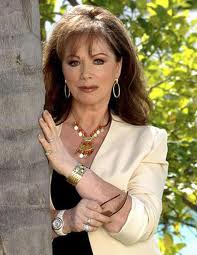
Jackie Collins now successfully combining self-publishing and trade-publishing
Today, in the fifth and final part of our ‘Which Distributor’ series, Orna Ross explains how independent authors can successfully work with trade publishers to distribute some of their books.
At a writers conference, an agent and writer are putting out tentative feelers towards each other. The agent is from a venerable company, with a long list of illustrious clients. The writer is an independent author, who has earned her indie spurs by successfully self-publishing two ebook thriller titles (with more on the way) and building a vibrant and growing fanbase, both for her books and her writing advice website.
The agent wants to sign this author, who is young, hardworking, full of ideas, with many books ahead of her. The author is actively seeking a trade publisher, because she wants a third party to handle print. For her, print takes too long and requires the sort of activities that don't interest her. It's the one thing trade publishing can do better than she can do for herself, she believes.
The two talk, they seem to understand each other. Back home, the agent sends over an Author Representation Agreement but before she's read too far, the writer is concerned. A clause states that the agent will
This post originally appeared on Jane Friedman's blog.

(picture: www.atlei.com)
Platform is one of the most difficult concepts to explain, partly because everyone defines it a little differently.
So let's break down this thing called platform a
Triskele Books is a team of six, three of whom are publishing books this summer. We  all have day jobs and different skill sets but what we share is that we’re all writers.
Together, we make one hell of a team.
The motivation behind the birth of Triskele came after a series of online conversations over a few months, culminating in a meeting in a posh London hotel to decide if this idea really had legs. We'd known each other online for about six years and although we lived in different countries, we were