


Write For Yourself, Edit For Your Reader
John Potter writes: In this time of emergent digital publishing, writers have never been more empowered to write the kind of…

John Potter writes: In this time of emergent digital publishing, writers have never been more empowered to write the kind of…
This post originally appeared on Jane Friedman's blog.
(picture: www.atlei.com)
Platform is one of the most difficult concepts to explain, partly because everyone defines it a little differently.
So let's break down this thing called platform a
OK, I’m the first to admit I’m subject to a not insubstantial influence from Ginsberg, 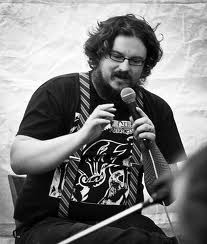 Cassady, Patti Smith and various other parts of late mid twentieth century American countercultur — but this really has nothing to do with navel-gazing, primal screams or the Age of Aquarius. Just like those slightly awkward elements of hippydom, though, this is one of those topics that makes authors shift uneasily in their chair, shuffle and generally look for an exit.
I get why writers resent the question: “What do you stand for?” You can understand it in two ways. First, it sounds like a
For a lot of self-publishing authors, getting their books into big-chain bookshops can seem as impossible as hitting a space station with a sling-shot.
There is something of a validation in walking into a bookshop, especially a big-chain branch, and spying your book on the shelf. It’s something we crave as indie authors. But as indies, with corporate structure and head office guidelines, that shelf can often seem a million miles away.
But is getting our books into big chains as impossible as we think?
HOW I DID IT
I’m a fantasy author of The Emaneska Series and my books The Written and Pale Kings are permanently stocked in some 20+ Waterstones stores across the UK. I hold regular signings and events at a large number of branches across the South and the Midlands – around twenty so far in the past year.
I’ve just finished one
We're ‘indies', right? Indie authors?
Most of us have embraced the term and have some idea what we mean by the concept. But there's a lot of confusion out there, with people using the term ‘indie' interchangeably with ‘self-publisher', and people meaning wildly different things when they use those words.
Here at The Alliance of Independent Authors we gave great thought to terminology when we were setting up. Were we going to be an alliance of self-publishers or independent authors? What was the difference, anyway?
Here are the conclusions we came to:
Triskele Books is a team of six, three of whom are publishing books this summer. We  all have day jobs and different skill sets but what we share is that we’re all writers.
Together, we make one hell of a team.
The motivation behind the birth of Triskele came after a series of online conversations over a few months, culminating in a meeting in a posh London hotel to decide if this idea really had legs. We'd known each other online for about six years and although we lived in different countries, we were
1. From Bard to Scribe Publishing began with the transition from oral to written culture. In traditional society, bards were…

Welcome! 
You've found your way to the very first post by the Alliance of Independent Authors, here on our brand new self-publishing advice blog.
A lot of people ask us why are so many authors going indie and self-publishing these days? The short answer is: because we can.
Self-publication served only a tiny number of writers before digital technology enabled print-on-demand and the direct distribution of ebooks. This technology simultaneously does four things that are very good for writers.