Updated July 2026 | Originally published May 2019 | By non-fiction author Denise Gaskins & the ALLi Team
Readers come to nonfiction books looking for information. Making that search as easy as possible means creating an index, and in 2026, that process looks a little different than it did when we first covered this topic. Here's an updated look at planning your DIY index, including which tools are worth using and where a professional is still the better call.
We all want happy readers. An index also helps sell books: many shoppers browse the index before buying, and librarians favour books with good reference apparatus. If you have the budget, a professional indexer is a great option: see Amron Gravett's 5 FAQs about Indexing for help finding the right person. But if you're publishing on a shoestring, you can DIY an index that serves your readers just fine. It takes real work, and this guide walks you through it.
Do you need a nonfiction index?
A table of contents (TOC) is a bird's-eye outline of your book's structure. An index is a list of all the smaller details that make your book worth reading. In print books, the TOC sits at the front as a map of the journey ahead; the index waits at the back until a reader needs it.
Think about how readers will actually use your book. Read once like a story, then set aside? You probably don't need an index. Used as a reference readers return to again and again? An index makes that far easier.
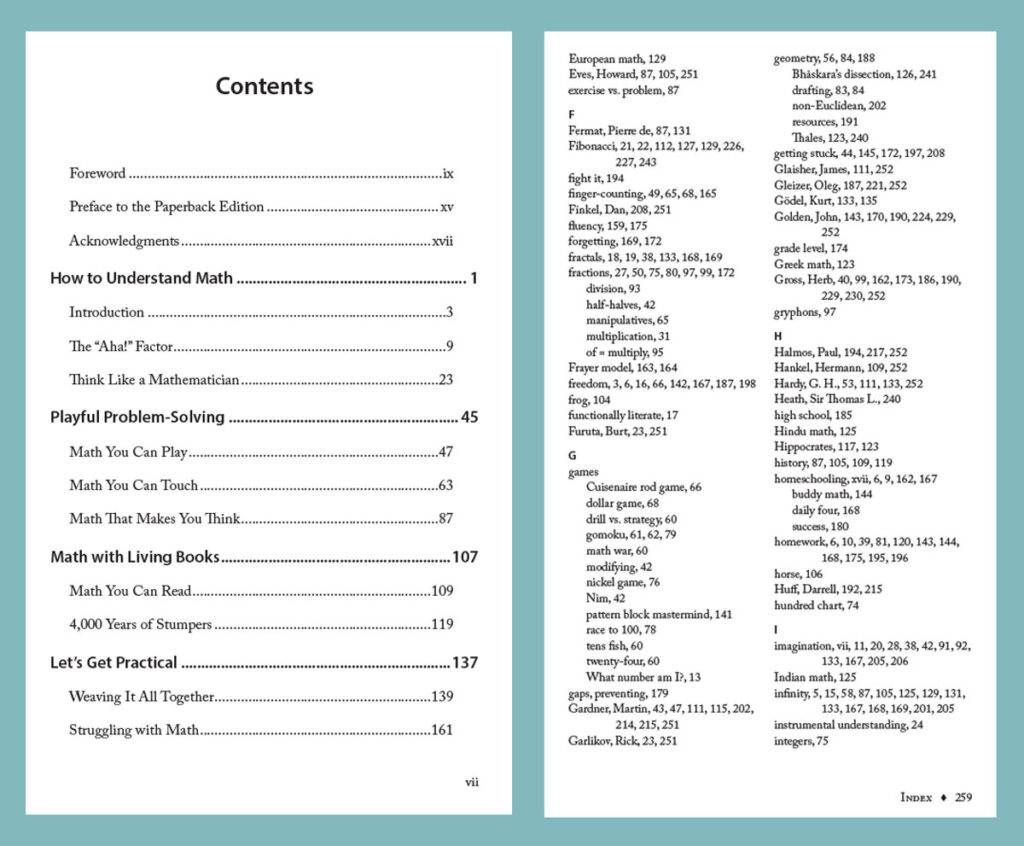
A table of contents and an index give the reader two very different ways to see your book
Should You Index Your Ebook?
We used to say ebook indexing was too much work for too little return. That's no longer the full picture.
The industry-wide standard for linked ebook indexes, developed through the EPUB3 specification, still hasn't been widely adopted by e-reading systems, so there's no single universal method: an index built for one ebook format won't necessarily work in another. But the DIY workaround (bookmarking each occurrence of a term and hyperlinking your index entries to those bookmarks) has matured into a well-documented technique that authors are using successfully. We walk through exactly how to build one in Part Two.
It's also worth knowing that built-in search on Kindle and other e-readers has reduced how much readers rely on a formal index in the first place. So the honest 2026 answer is: more achievable than it used to be, but for many nonfiction ebooks, a good search function already does part of the job. Decide based on how readers actually use your book: a recipe or reference title benefits far more than a memoir.
Publish Your Non-Fiction Book Successfully
You've created an index, now it's time to publish your book the right way.
Give Yourself Plenty of Time
Don't try to make an index until you've finalised your book's layout, and this is one of the last steps before publication, which tempts everyone to rush it. Slow down instead. The basic process is simple:
- Create a list of topics.
- Mark the entries on each page of your document (Word or InDesign).
- Let the program generate your index.
- Tweak and repeat until satisfied.
Timelines vary widely, from five hours to several weeks depending on your book's complexity and your own experience. Budget a week or two for a typical nonfiction title, including “ruminating” time for topics to settle in your head, and expect to cycle through the process three or four times to catch every gap.
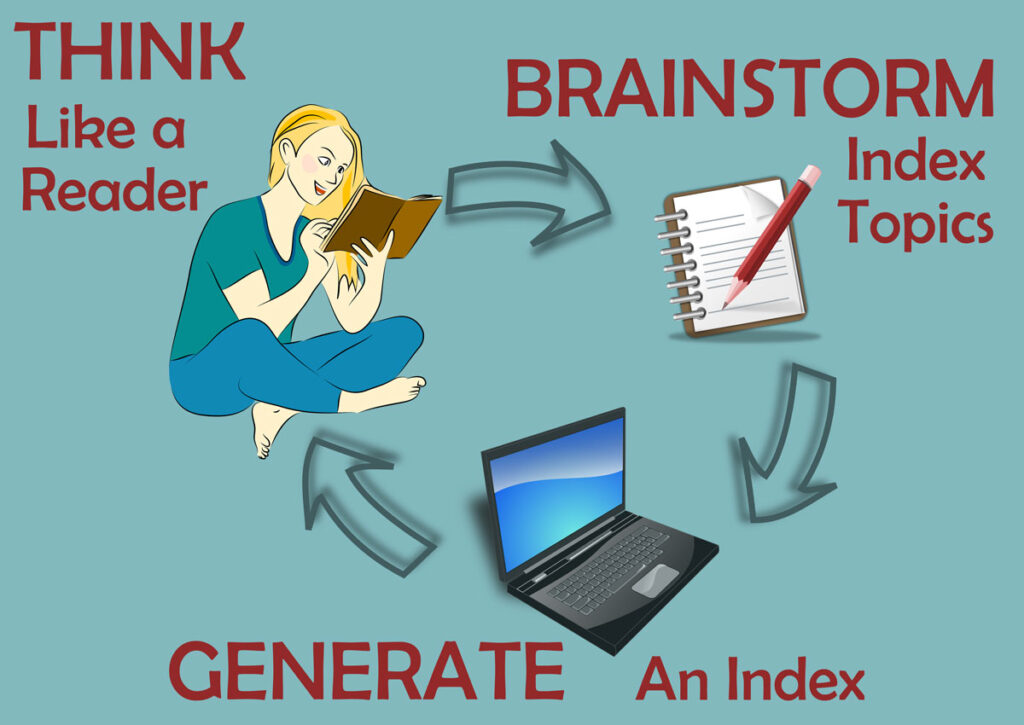
Creating an index is a cyclical process — at least, for me.
Brainstorm Your Topic List
Don't open your indexing software yet. Start with the basic outline of your book: chapter titles, subheads, image captions, table headings. Index entries are primarily nouns: people, places, organisations, abstract ideas. Gerund phrases (“-ing” words) work well as subtopics under a main noun.
Think of synonyms and alternate phrasings, since your reader's mind won't necessarily work the same way yours does. Group related ideas into subtopics under a broader heading. And watch for the common mistakes covered in Joanne Phillips's Beginner's Guide to Indexing.
Print your entire manuscript and go through it by hand. Circle proper nouns, then note more abstract concepts in the margins. Ask yourself: if a reader wanted this information, how would they phrase it in their own head? When a new topic occurs to you mid-book, go back and add it to earlier pages too. Decide upfront how you'll handle a topic that spans several pages. Noting just the start page is simplest, though some indexers prefer the full range (this needs bookmarks; more in Part Two).
Publish Your Non-Fiction Book Successfully
You've created an index, now it's time to publish your book the right way.
Choosing Your Tools
Word and InDesign remain the two most common choices (more on using Word specifically in Part Two). If you outgrow Word's built-in indexing, a few dedicated options exist:
- Cindex: long the standard among professional indexers, now free and open-source.
- MACREX: free with an optional donation; an older interface but powerful.
- Picardy: free, and aimed specifically at occasional or one-time indexers, with a gentler learning curve than Cindex or MACREX.
You'll also see AI-native tools claiming to generate a complete back-of-book index automatically from an uploaded PDF. Treat marketing claims from these tools with the same caution you'd apply to any self-publishing service: check ALLi's Self-Publishing Services Watchdog before trusting your book, and your money, to one.
When DIY Isn't the Right Call
Not every author wants to, or should, DIY their index. If yours is a longer, denser, or highly technical nonfiction title, a professional indexer may be worth the cost. Amron Gravett's guide (linked above) is a good place to start, and the American Society for Indexing runs its own referral service if you want someone vetted.
Publish Your Non-Fiction Book Successfully
You've created an index, now it's time to publish your book the right way.
Continue to Part Two
Read Part Two, where we walk through the actual mechanics of building your index in Word, including how to carry it across to a large print or hardback edition, and how to build a clickable ebook version.
Alliance of Independent Authors
The global non-profit association for indie authors
ALLi members get all guidebooks free, personalised advice, a range of benefits, discounts and deals–and access to a community of thousands of working indie authors.
If you're serious about publishing well, membership is your next step.