



Maribel Steel
Digital publishing has created such an explosion of options for indie authors in getting their books out into a worldwide marketplace, yet our books often sadly remain inaccessible to millions of readers.
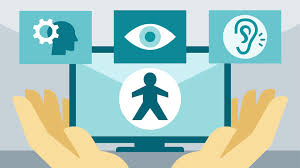
Both print and ebook publications are not reaching the eyes, ears, and hands of so many people who would love to experience the immense pleasure and importance reading brings into our lives due to having a ‘print disability’.
Self-Publishing Accessible Ebooks: A New Guide
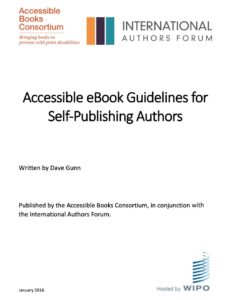
A brand new professional tool offering a comprehensive guide to empower authors in understanding the first steps towards making their manuscript accessible for millions has arrived. This comprehensive publication written by Dave Gunn, Accessible eBook Guidelines for Self-Publishing Authors is published by the WIPO Accessible Books Consortium, in conjunction with the International Authors Forum (IAF), and is being made available to you by the Alliance of Independent Authors.
This is a tremendous resource that every indie author who is keen to create accessible eBooks should peruse.
This set of guidelines the first of its kind. It also provides a highly practical overview of the world of accessible publishing, complete with a helpful checklist, and a “further resources” list.
All this strengthens an author’s sense of confidence in creating their next manuscript in an accessible publication format, and reading through the set of guidelines opens one’s eyes to key terms while raising one’s awareness to current software options when considering the design of an accessible eBook.
One of the highlights of reading through the guidelines as a vision-impaired author is knowing that I can also take advantage of a set of guidelines accessible to both author and reader.
Why Publish Accessible Ebooks?
Katie Webb
As a visually-impaired person and indie author myself, I am not fond of placing people into categories but it is worth pointing out that this group includes those living with a physical or sensory disability (such as being blind or vision-impaired), as well as those having a cognitive and learning disability – with Dyslexia affecting a staggering one in ten people globally. Therefore, it is highly probable that potential readers are not accessing our books and it doesn’t have to be this way. Katie Webb[/caption]
In a few easy steps you can open up your books to the millions of readers who can’t access texts in conventional formats because they are visually impaired or otherwise ‘print disabled’.
I am so grateful to our industry ‘watchdogs’ such as the International Authors Forum (IAF), the Accessible Books Consortium (ABC) and the Alliance of Independent Authors (ALLi) who are dedicated to creating a global network empowering authors with a set of standards that will make more books accessible to more people.
If the seeking of knowledge and the freedom to read books is important to you, I encourage all writers and publishers to seriously consider how creating ebooks in accessible formats is the next frontier to publishing: by taking up the recommendations set out in these guidelines, we open the way forward to create more possibilities for a worldwide readership.
Be a proud link in the chain which enables people like myself to stay connected through our passion for our craft.
Together, we can support each other and bring the focus on reaching a whole new audience by designing our manuscripts in an accessible format available for everyone to enjoy.
Accessible Ebook Guidelines: Click to Download
Accessible eBook Guidelines for Self-Publishing Authors – Download Here
Self-Publishing Accessible Ebooks: A Guide for Indie Authors



Share
Comments are closed.
Latest advice, news, ratings, tools and trends.
ACX and Audible’s New Payment Model: What You Need to Decide Before 31 December
If you have audiobooks on Audible through ACX, you have a decision to make in the next twelve weeks. From…
News Summary: Audible’s NielsenIQ Report Finds Audiobooks Drive Cross-Format Reading; Human Narrators Still Matter
Audiobook companies like to publish numbers with two kinds of finding. First, that the audiobook market is expanding. And second that they as a company are responsible for a large amount of the good stuff they have just demonstrated. Spotify has so far been the leader in this field, but Frankfurt Book Fair saw Audible jump headlong into the space with a much-vaunted report commissioned from NielsenIQ that was launched there.
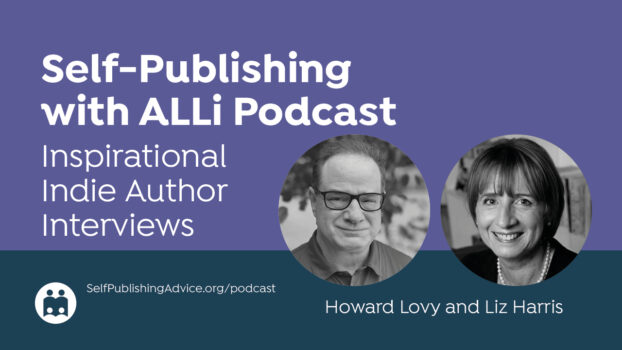
Inspirational Indie Author Interview: Liz Harris Builds an Indie Career on History, Romance, and Creative Freedom
My ALLi author guest this episode is Liz Harris, a historical romance author whose path to publication took her from a lifelong love of reading and writing through teaching, travel, traditional publishing, and eventually self-publishing. She talks about how history and place shape her fiction, the freedom she found as an indie author, the importance of treating publishing as a business, and why she chose to remain indie even after returning to traditional publishing.
[…] Reaching all our Readers: Making books that Everyone can read: Katie Webb & Maribel Steel […]
[…] Reaching all our Readers: Making books that Everyone can read: Katie Webb & Maribel Steel […]
[…] Reaching all our Readers: Making books that Everyone can read: Katie Webb & Maribel Steel […]