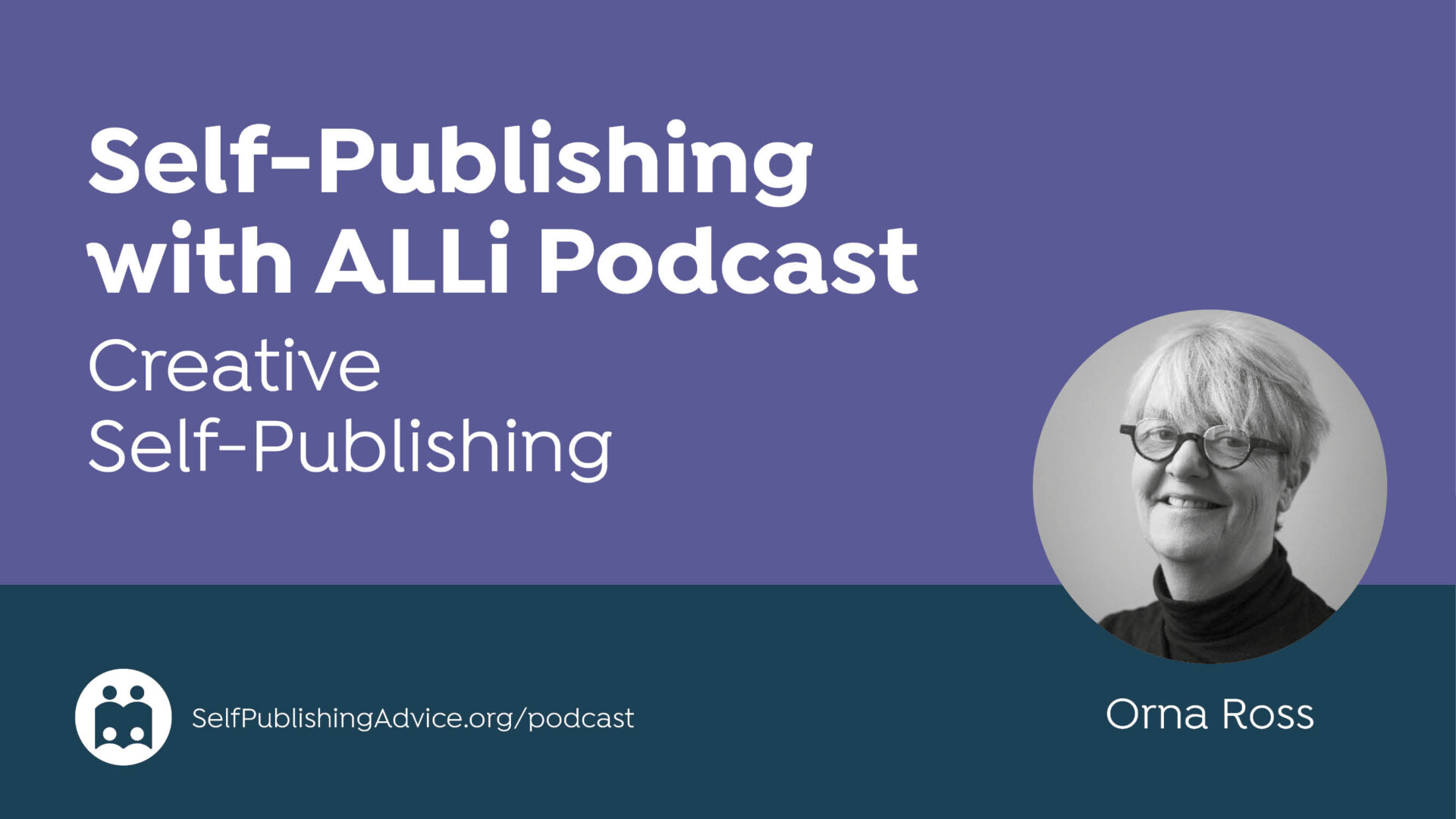
Orna Ross, founder and director of the Alliance of Independent Authors, discusses the development and purpose of Indie Author Lab, explaining how it was created in response to changes in the indie author community—particularly the rise of AI.
An ongoing monthly program designed to help serious authors address their specific challenges, the Indie Author Lab is based on Orna's Alliance of Independent Authors guidebook, Creative Self-Publishing, and focuses on four measures of success: productivity, platform, profit, and pleasure.
With live monthly sessions on Substack, a community chat room, and access to resources and tools, the program is flexible enough to work for authors at any stage of their development — and will feature at AuthorNation 2026.
Find out more and register on Substack: OrnaRoss.Substack.com/p/indie-author-lab
Listen to the Podcast: Introducing the Indie Author Lab
Show Notes
About the Host
Orna Ross launched the Alliance of Independent Authors at the London Book Fair in 2012. Her work for ALLi has seen her named as one of The Bookseller’s “100 top people in publishing”. She also publishes poetry, fiction, and nonfiction and is greatly excited by the democratizing, empowering potential of author-publishing. For more information about Orna, visit her website.
Thoughts or further questions on this post or any self-publishing issue?
 If you’re an ALLi member, head over to the SelfPubConnect forum for support from our experienced community of indie authors, advisors, and our own ALLi team. Simply create an account (if you haven’t already) to request to join the forum and get going.
Non-members looking for more information can search our extensive archive of blog posts and podcast episodes packed with tips and advice at ALLi's Self-Publishing Advice Center.
Read the Transcript
Orna Ross: Hello and welcome to Self-Publishing with ALLi. I'm Orna Ross, and this is our creative self-publishing slot, set up to inspire you for the rest of the week. I'm here today to talk about the developments with Indie Author Lab, which we launched at the London Book Fair in March of this year. It has since grown to have a digital wing, and we're also going to be running a lab at AuthorNation in November. As it has morphed and changed shape, I thought I'd talk about why I created this program, how it comes out of a very particular moment in the indie author space, and how you can access it.
Where did the idea come from? A couple of years ago we began to notice a change in attitude in the community — a growth in fear around what AI means for authors, whether there's any point in doing what we do anymore, a general feeling of disheartening. It was a new phase in the indie community. Up to that point, positivity had reigned. Everybody recognized and appreciated how lucky we were to have new author tools that meant we could reach our readers while still holding our rights — which is the fundamental revolutionary thing about digital self-publishing. We gained access to wide distribution for ebooks, digital audio, and digital print through print on demand. These were wonderful developments, particularly for those of us old enough to remember when getting a book into readers' hands involved a third party and a lot of ‘please choose me.'
Post-pandemic, things began to shift. I think the pandemic was in some ways good for reading, and what's good for reading is good for writers. But the rise of AI was one factor in a new and more critical, more questioning phase. That's a good thing overall — communities mature, honeymoon periods end — but it has led some people to feel there is no point, particularly around AI. Some authors have responded by finding ways to emphasize their humanity and make that clear to readers, which is a conversation we've had before and will have again.
But something else is also happening. Because of all the wonderful tools that are available and the things AI can do that humans can't, we now have a surface of information as authors that would have been unimaginable not long ago. I'm old enough to remember when information about how to publish, how to reach a reader, how to write well was simply not available — you had to haunt libraries and bookstores to find it. Now we're absolutely inundated with it. ALLi still curates information, and always will, because there is always a need for sound information and explanation. But we've moved beyond that into a different phase of need.
It became clear over the last couple of years that it's not enough to just know what to do. Other things are needed to ensure you actually do what you know you should be doing. That's what Indie Author Lab is all about.
What the Lab Does — and Who It's For
I have a long history in teaching — including university teaching, and in prisons and with immigrant groups, in all sorts of challenging situations. My biggest challenge in creating this program was pinning down what is core in terms of where each author finds themselves at a particular moment. Indie Author Lab pins that moment and builds out from there.
It is not a conference. It's not a one-off event. It's not anything you've seen in the indie community before. It's an ongoing space for reflection and focus — for going deep and moving forward at the same time — designed around your challenge right now. Whatever is going on for you, you bring it into the lab, and you work with a workbook that takes you to the next step. That could be around your writing, your book production, your marketing and promotion, or your business challenges. The same workbook works for any of those, and at any stage you're at with each of them. You can use it again and again in different situations and find different answers coming up.
The intention is that wherever you find yourself, you can move to the next step — and that's all you focus on. The lab also challenges your intentions: what are you doing right now? Do you need to be doing it? Are you doing the right things for you? So often, because there's so much information out there, we hear something that sounds like a good idea and jump into it without really asking: does this suit the kind of author I am? Does this suit my genre? Where are things going in reading and reaching readers generally? The lab is designed to handle that complexity — it's particularly good for the tricky problems most often found on the writing end or the marketing and promotion end.
Making a book — the mechanics of cover, interior, making it accessible — is very overwhelming on your first book, but once you've done it, it becomes quite easy. Similarly, getting organized at a business level, while not simple, has identifiable steps to follow. Those two areas are relatively straightforward compared with creative writing and what I'd call creative marketing and creative promotion. You cannot survive as a writer or as a marketer without bringing your creativity to the task. And bringing creativity to the task means following certain practices and processes that ensure you're in flow, listening to your inner voice. That's what the lab focuses on.
Another side effect of information overload is that when your mind is very busy, you're not really in what I call the create state — the state of flow. The exercises in the lab are designed to drop you into that place. You'll be familiar with it as a writer; the lab applies it to your current publishing challenge.
Who is it for? It can be used by writers at any stage of development, either as a writer or as a publisher. But it's definitely for those who are serious and want to progress. It doesn't matter where you are, but you need to be dedicated — not just trying something out, or doing it because a traditional deal didn't come through and that's what you really wanted. It will take you forward wherever you are, but it's designed for those who are serious about writing and publishing and want to make that a central part of their lives.
The Four Measures of Success: Productivity, Platform, Profit, Pleasure
The lab is built around the four measures of success outlined in Creative Self-Publishing, relevant to every author. Success means different things to different people, and the word has become so overused that we can get confused and assume it just means sales — which it sometimes does, absolutely, but it means much more than that. It's important to come to a definition of success that makes sense to who you are.
The first measure is productivity — staying focused on what matters around your writing (getting the words written, edited, shaped to the standard you want), but also productivity in publishing: getting books finished, done, and out where readers can find them.
The second is platform — understanding what components your platform is comprised of and measuring its growth. For some authors that's social media; for others it's the email newsletter, or live events, or something else entirely. It depends on how you have constructed your platform.
The third is profit. A lot of the work we do in the lab is about money — our relationship to money, making that healthier and happier, but also looking practically at what actually moves the needle on profit. We sometimes see indie authors with huge revenue who are selling a great volume of books but not making much profit. That can be a deep area of exploration in the lab: why is that, what do we actually want to profit from, and what's the psychology and emotional dimension of how we're relating to money?
The fourth — and to me the most important — measure is pleasure. How do you ensure you are taking real pleasure in your writing and publishing, so that it doesn't become overwhelming or frustrating? There are actual ways and practices that help, and they're embedded in the creative process itself. That's very much part of what we do in the lab.
The Monthly Rhythm: Set, Do, Review, Renew
The lab runs on a four-week rhythm. In week one we set creative intentions under three headings: maker, manager, and marketeer. We use a free-writing process that turns down the noise, allows you to listen to yourself, and gives you your own answers. You leave with the workbook exercises done and a clear plan for the month — and every person's plan will look different even from the same process. That's part of the magic.
In weeks two and three, you do the work. You carry the plan into your actual days, because what we imagine and plan is always different when we take it into reality. There's a community chat room where you can talk, ask questions, think out loud, cheer someone on, or just listen. One month you might be vocal in the chat; another month you might just lurk. It's all good as long as it's supporting you toward the intention you've set.
In the fourth week we have the Substack Live session — the heart of the month — where we review the intention. What's working, what's not working? Then one of three things happens: we renew and recommit to what we're doing; we revise and adjust the plan to meet where we actually are; or we release — and that last one is often the biggest win. Realizing you were working on something that wasn't the right thing, and letting it go, is often the quickest route to making real progress. After the review I'm available for an ask-me-anything, where you can bring questions about where you find yourself right now.
The lab is a membership, runs annually, and the value compounds with each session. Posts, videos, and insights are added to the archive as you go, so it's building as you grow. The archive also includes talks and sessions from conferences — insights harvested at the London Book Fair, AuthorNation, and other leading indie author events we attend.
What's Included and How to Join
The workbook is at the center of everything, designed around the processes of publishing and tailored to your particular challenge right now. There's also an ebook copy of Creative Self-Publishing, which provides the theoretical framework the lab came from. And there are various downloadable and printable tools, planners, and things that take you through the practices and processes in the intended sequence.
The lab can be used by anyone who is serious about their writing and publishing and wants to progress — but it's not designed for those looking for a Q&A about how-to specifics. ALLi gives a lot of that already through the Self-Publishing Advice Centre, which is freely accessible whether you're a member of ALLi or not. The lab is something different: a space for deeper reflection and sustained forward movement.
If you're going to be at AuthorNation in November, we'll be running a three-hour in-person lab there. And I'm running the digital lab on my Substack. You can find it at ornaross.substack.com/indie-author-lab — not the most audio-friendly link, but Substack doesn't do pretty links. You can also just search for Indie Author Lab and it's not hard to find. If you have questions or want to know more, just drop me an email or a message and we can work out whether it's right for you.
I hope that was helpful in explaining what it's all about. Have a wonderful month, enjoy your writing and your publishing, and till we speak again, take care. Bye-bye.
Find out more and register on Substack: OrnaRoss.Substack.com/p/indie-author-lab