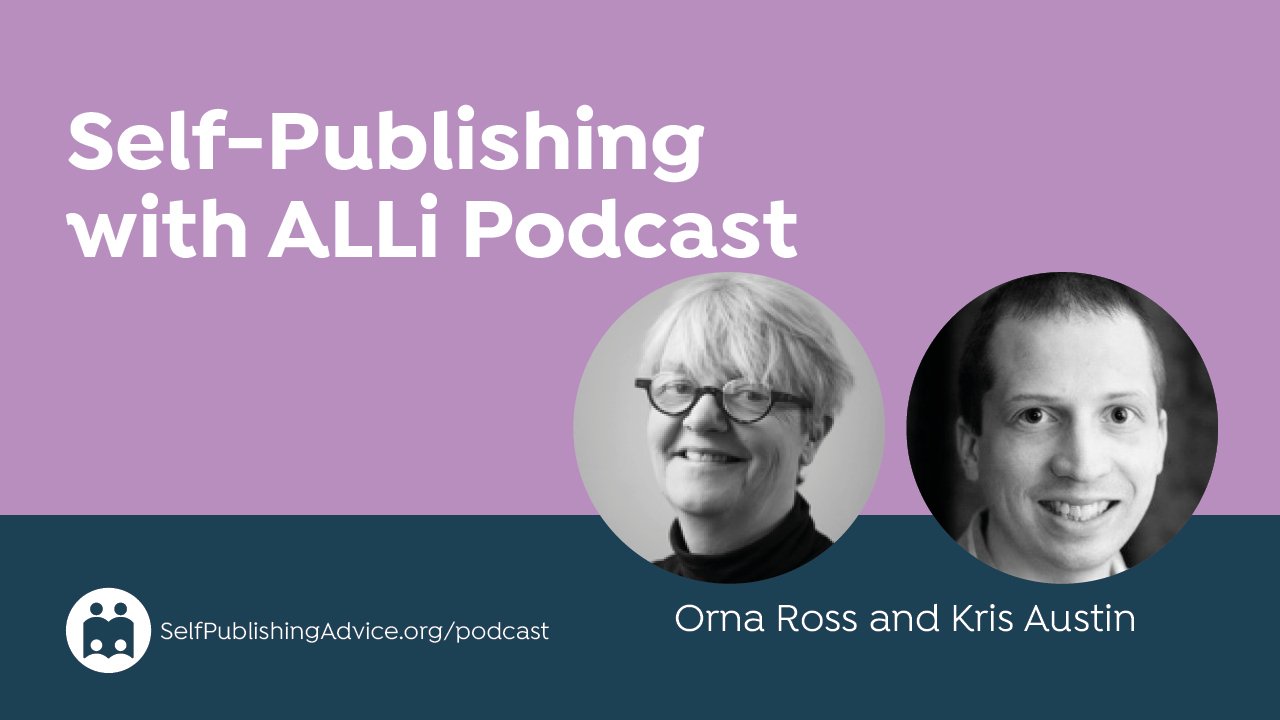
In this member-first partner webinar at the Alliance of Independent Authors, ALLi Director Orna Ross presses Draft2Digital CEO Kris Austin on the $20 activation fee and $12 annual maintenance fee that landed on indie authors in April with no advance warning. Austin explains what the fees are meant to stop, why authors weren't consulted first, and whether the era of free, open access to publishing platforms is drawing to a close.
Listen to the Podcast: Inside Draft2Digital's New Author Fees
About the Host
Irish author and poet Orna Ross is cofounder and director of the Alliance of Independent Authors (ALLi) and a passionate advocate for self-publishing and author empowerment. Her books are international bestsellers and have won many awards, including the Goethe Grand Prize for Historical Fiction and a Gold Literary Titan Award for poetry. Her work for ALLi has seen her named one of the top 100 people in publishing by The Bookseller. Born and raised in Wexford, in the southeast of Ireland, she now lives in St Leonards-on-Sea, in the southeast of England, within working reach of London. Her motto: “When in doubt, be braver.”
About the Guest
Kris Austin is cofounder and CEO of Draft2Digital, one of the world's largest digital publishing and distribution platforms for self-published authors and independent publishers. Since its founding in 2012, Draft2Digital has grown to support more than 300,000 authors around the globe, who have collectively released more than 1 million titles. More information can be found at https://draft2digital.com.
Thoughts or further questions on this post or any self-publishing issue?
 If you’re an ALLi member, head over to the SelfPubConnect forum for support from our experienced community of indie authors, advisors, and our own ALLi team. Simply create an account (if you haven’t already) to request to join the forum and get going.
Non-members looking for more information can search our extensive archive of blog posts and podcast episodes packed with tips and advice at ALLi's Self-Publishing Advice Center.
Read the Transcript
Orna Ross: Hello and welcome. We are here for another partner webinar here in the ALLi Member Forum, and I’m very excited to be speaking to Kris Austin this evening about the recent changes that have been happening at Draft2Digital, which I know a lot of you are concerned about and interested in. So yes, Kris is now on his way across cyberspace to join us shortly. Hi, Kris.
Kris Austin: Hello.
Orna Ross: Thank you. So how are you, first of all?
Kris Austin: I’m doing great. How are you?
Orna Ross: Yeah, good, thank you. All good. We’re having all the seasons here in the UK at the moment. It’s supposed to be summer, but we’re on brand. It isn’t really.
Kris Austin: Yeah. My family was in London actually last week on family vacation, and it was hot.
Orna Ross: Ah, you got that. You got the summer. Yes. That hot week that has now disappeared completely. Congratulations. Well done. So for those who don’t know you, would you like to tell us just a small bit about yourself and Draft2Digital and your role there, and all of that, just by way of introduction?
Kris Austin: Yeah, absolutely. So, I’m Kris Austin, one of the co-founders and CEO of Draft2Digital. We started in 2012, if you can believe it, so over 14 years. And my background’s actually a technology background. I’ve been in IT and software-related stuff my whole life until we started Draft2Digital, and technical is what I do. And I read lots of books, especially sci-fi and fantasy. Those are my favorite genres. And so I’m very excited to chat.
Draft2Digital is all about helping authors achieve their dreams, really, by getting rid of the tedious parts of what you do after you finish writing your book. We like to help out wherever we can when it comes to all the technical aspects and getting your book everywhere.
Orna Ross: That’s great. Well, we have some sci-fi and fantasy writers in the room who are cheering and jumping up and down, and now we expect you to take a look at their books.
Kris Austin: Of course. Will do.
Orna Ross: Exactly. You haven’t been tempted to write a book yourself yet?
Kris Austin: No, no. I don’t think writing’s in me. I have other hobbies. Right now 3D printing is my hobby.
The Two New Fees
Orna Ross: Oh, wow. Very cool. Okay, let’s talk a little bit about these recent changes at Draft2Digital.
You won’t be surprised. You know already through our correspondence, and also obviously you’ve heard the response throughout the community over the past number of weeks since this change was made. Take us through it, first of all, in your own words. What has changed at Draft2Digital? What are these fees? Who pays them? Just the facts, firstly.
Kris Austin: Sure thing. Absolutely. So we introduced two fees. We announced them April 15th. And there are two distinct fees, both really targeting two different problems. The first one is the activation fee, which is a $20 fee to turn on distribution through our distribution network.
All of our other features are free up to that point. The formatting is free. You can play with our whole system, do anything you want, but if you want us to start sending your book places, then it’s a $20 activation fee. That’s a one-time fee. The goal of that fee is primarily to slow down AI automated generation accounts, automated slop accounts. And we can get deeper into that later, about why we think that’ll work and what we’ve seen so far.
The other fee is what we’re referring to as our maintenance fee. This is a $12 annual fee to continue to use the distribution services. So we distribute your books, we handle all the reporting and taxes, we audit the retailers to make sure that they actually have your books live and listed the way you want them to be. We continually add new retail partners, it gives you access to all of our print distribution as well, and all of that. That’s $12 a year.
When we started Draft2Digital 14 years ago, we were completely free, and we’ve always been completely free all the way until this time, except for our commission. And that business model really did work really well for quite a long time. But as you know, business models sometimes have to change. Over such a long period of time, you can’t really see the future and see what’s going to work, and publishing has changed a lot in the time that we’ve been working.
And this fee is intended to help make the business model stand up and hold so that we can continue to support authors and create more tools and better tools. And that $12 fee, we hope, is worth it to people for access to our distribution network and all the tools that we provide. We wanted it as low as we could possibly make it, and I figured $1 a month was about as low as we could go.
Why a Fee, and Not Another Solution
Orna Ross: It’s not a high fee by any means, but it is our experience and the experience of consumers generally that once a fee comes in, it rarely stays at the level it comes in at. So certainly the fee is not high at this point in time.
Before I get into some of the responses and reactions, can I ask: before you decided to make it a fee, to solve the problem — and as you said, we’ll get into the weeds and the nitty-gritty of the problems in a few moments — but before deciding to go ahead with the fee, did you consider other ways in which the AI slop problem, as you call it, could have been tackled, like identity verification, say, or stricter onboarding, or other measures? Were there other alternatives on the table considered?
Kris Austin: Sure, yeah. So actually the things you just listed, we do all those already. We have been dealing with this for a while. We do have to take a little step back. Ever since Draft2Digital started, there has always been a part of the industry that tries to take advantage of other people, tries to figure out ways to trick people into buying books that aren’t worth buying. Scammers are one example, but also copyright infringement and useless nonfiction books. This has been a problem from the very beginning. In fact, I often joke, and it’s probably not an exaggeration, that over half of our software is around stopping those people and stopping those books, and we’re very, very good at it.
We’ve been doing it a really long time. And over the years, we’ve added on more and more things that most authors won’t even notice we’ve done, because it’s all behind-the-scenes work. But we do identity verification. We’ve been doing that for years. But we do this on an as-needed basis. We have a lot of tools that let us know about accounts that we’re suspicious of, and then we will require those to do identity verification.
Identity verification is expensive, and I don’t think people realize that. It costs a lot of money to do identity verification, and so we want to use it when it’s appropriate. It also creates a lot of friction. So legitimate authors — we start asking them for their driver’s license or passports or other personal data, and they start to feel quite uncomfortable. I don’t want to put those roadblocks up either, but we do that in a lot of cases.
And what has really happened over the last few years with the release of large language models or generative AI tool sets is that it is making it a lot easier for these nefarious actors to put out a lot of content and to create a lot of accounts. We’re very good about catching accounts that put out a lot of content. Those are really easy to notice. I mean, you can just think about that conceptually. It’s like, oh, somebody uploaded 100 books today. I wonder if we should look into their account. That’s really easy. They do over a hundred books in a month, and we start to notice, or really a few in a day. We built these over years and refined them.
What has become really tricky is these actors can create lots of accounts that publish one book, with the goal being they want to sell like one or two copies. So this is their business model: sell just a couple of copies across thousands of titles. They use stolen identities from other countries. It is just amazing what they will do to get around the concepts. And so this activation fee, its entire goal is to break their business model. Our goal is to make it so that it makes no sense for them to keep doing what they’re trying to do.
The early data — so it’s been almost two months now with that activation fee — is very, very positive. We are seeing a huge reduction in that demographic of user accounts, and we’ve seen only a slight reduction in the number of new legitimate author accounts. Thankfully, they’ve been signing up, been using our services. It’s reduced our customer support load significantly. Our customer support response times are now really, really fast, within a few hours, when just a few months ago we were getting days behind on customer support. It’s just really hard to keep up with. So we’ve been doing a lot.
Now, we don’t normally announce how we filter out bad actors, and I think it’s important to realize that, because if we announce how we stop people, they now know, oh, that’s what they’re doing, and then they’re going to go find a way around it. So we don’t normally announce those.
Do the Fees Stop the Bad Actors?
Orna Ross: Yeah. That was actually one of the points made by John Doppler, who heads up our watchdog desk, and who I’m sure you know. And John’s argument is that these fees are not really a big deal to big content farms, or to the sort of bad actors you’re talking about, who are a scourge to us all. They’re everywhere, all over publishing, and just making everybody’s lives so much harder, for sure. And authors would have great sympathy for yourselves and other platforms in terms of trying to deal with that, because it is a real, significant problem.
But John’s argument was essentially that they can absorb that kind of fee, whereas the indie author who’s at the start of their journey particularly, or perhaps who has a book that is never going to be a big seller — he actually cites his own mother’s book, which is well respected, but it’s on a very niche topic, hydrology and drainage in rural Virginia, so it’s never going to be a bestseller. She will bear the impact of this change, whereas bigger organizations or content farms or bad actors can absorb it fairly easily. What do you think?
Kris Austin: Yeah, so, yes, I totally agree. If all they were paying was $20 or $100, then I totally agree. That’s not going to really stop them, and it’s really going to not be an issue. But that would be like someone creating one account and paying $20 and then us not stopping them and catching them. Like I said, we already have a lot of other tools that we use to stop and catch those accounts. There have been months that we’ve rejected over 70% of all titles submitted to our system. I mean, 70%. Imagine the amount of software and manpower it takes to block all those books.
So the other ideas were to charge a per-book fee, and I didn’t want to do that. I was like, “That makes me extremely uncomfortable.” And so the account-level fee felt more accurate, because we can catch the individual accounts doing nefarious stuff. What we can’t easily catch is one user making 100 accounts. If they’re making 100 accounts, that’s $2,000. You’re no longer talking $100, you’re talking $2,000. And scale it up. So it just breaks that concept and that model. So we think $20 is the right value, to be affordable to the indie authors.
We never wanted to charge fees. We debated so much internally, because it is a fundamental change to how Draft2Digital thinks about the indie author community. We want it available to every single author who cares about their book. And the fee was so hard. Both of them, really. We debated for months and months, and tried every other thing we could imagine besides the fee. And that’s one of the reasons why we kept it so low. It needed to be high enough to make it painful to those scammers, but we needed it to still be affordable for indie authors. And so that’s where we landed, at the $20. And we believe it’s the right number, but we’ve only had a couple months’ worth of data. So far it’s looking great.
Announced Without Warning
Orna Ross: One of the other things that authors felt deeply, I think, because as you say, Draft2Digital has always been a very pro-indie platform. You won ALLi’s Self-Publishing Service of the Year in 2013, after your first year in business, because the whole attitude and the whole approach has always been pro-indie. You’ve added great tools, as you say, that are free of charge and so on. And you’re always at all the conferences. People know Dan and other members of the team really, really well.
And then this arrived with no pre-warning, no discussion, no talking to the authors. No, as far as I know, talking to any author organization. Certainly we didn’t have a conversation about it, though you’ve been an ALLi partner since you started. And I think this is one of the things that authors are feeling really bad about. Could you speak to that?
Kris Austin: Sure. Absolutely. So, as you mentioned, we are very involved and embedded in the community. We have many authors that work here. We have many indie authors as employees. We have many people who’ve been in the publishing industry for decades. We know the industry through a lot of connections and people, and we did talk to some people and reach out to them and get their thoughts. But we wanted to keep this one pretty tight, because it’s pretty scary releasing a new fee.
And there’s a lot of concern about how that gets talked about and discussed before that happens. And then the scammers, especially if they started noticing a fee was about to come up, they would just flood our network or get those accounts in before. In fact, we’re still finding a lot of accounts that were recently created with no books on them, and then they’re starting to now add books to them. This is the nefarious actors.
And so I do recognize that these things come out as a surprise. And believe me, I understand that that’s not a good feeling. And in some ways those things cannot easily be helped, because of the way they unfold. The actors that we’re dealing with make things like that very difficult to do in a way that would let the community realize what’s going to happen before it happens. It actually would have a negative impact on the situation, not a positive one.
Orna Ross: It also, though, is part of how tech deals with creatives, in that there’s a sort of pattern across the industry where significant changes happen without authors being alerted. It keeps landing on the community as a fait accompli. Terms and conditions get changed, and we’re not always alerted, they’re just changed, and we have to go and search them out. Do you think there’s room for improvement here in how the platforms communicate with the people whose work is essentially what keeps the platforms going?
Kris Austin: I do think that, especially the larger players, could have much better communication around what’s going on. But I also get what they’re going through. I think about, like, Amazon, and how they change their algorithms in ways that just completely destroy authors. Makes me angry every time I see it happen. I get it.
But I don’t think it’s quite fair to put Draft2Digital into that same sort of category, because we’re providing a service of distribution, and I think our cost is very reasonable for what you get. We just provide so many free resources and free services, and we’re just asking for a little help on this one part. And so I just think the scale we’re talking about is very different, of an Amazon just suddenly changing their algorithms that literally cause people that are making hundreds of dollars a month, thousands of dollars a month, to go to zero, versus a $1 a month change.
Orna Ross: Yeah. I’m not comparing platforms, because most authors use a variety of platforms. So the thing is that they’re experiencing whatever change is going on in a platform versus it being them all. And when this change came from Draft2Digital, I guess a question I would ask you is, what would meaningful consultation with the indie author community look like? Will there be an appetite at Draft2Digital, do you think, for advisory input on things like this from trusted authors or author organizations before changes of this scale are finalized?
Kris Austin: Well, without knowing — I mean, we don’t know what the future’s going to look like. It’s just really hard to say. Hopefully this doesn’t happen again. And I don’t know what’s going to happen in the future, and I can’t really make any promises, because whatever change needs to happen will have its own approach to solving the problem. And I know that’s not a welcome answer, but I just think it’s a very fast-moving part of the business.
And in this case, yes, we added a fee, and you always have to announce it at some point. And people aren’t going to like the change either way. It needs to be announced. And we really put off putting the fees out. Frankly, we waited longer than we should have. We needed to get it out quickly because we never wanted to do it, and we just kept delaying and delaying and delaying. And I think that ended up with some of the haste that you saw from us. The fees were going to have to happen, essentially, and I think almost the whole industry is going to be doing something to do with upfront money. I don’t like it, but I don’t think that there’s a way around the problem.
I think indies are in a very dangerous space right now, because the easier it is to publish, the easier it is for scammers, and they use the same methods that indie authors use to get their books out. And we need to find a way to make sure — and this is where consultation would be a great place, Orna — we need to find a way to make sure that legitimate indie authors are not scooped up and wrapped up in all the junk and terrible stuff being put out by people trying to take advantage of others. And that weighs on my heart on a constant basis, because there’s so much risk here that the industry starts blaming the indie movement itself for what’s happening to the retail platforms getting flooded with really, really bad content.
And so we’re trying to find ways to help with that while creating a sustainable business, so we can be around to help with that, because I think that that’s one of our responsibilities, to help the indie space be vibrant and lively and be an essential part of the publishing industry.
Plagiarism, Impersonation, and Identity Theft
Orna Ross: So what about AI-driven plagiarism, say, impersonation, identity theft, those kind of deeper problems? Fees and caps don’t really reach that, do they? Can you tell people a little bit more about what Draft2Digital are doing about authors being copied and scraped and impersonated? And is there room for meaningful coordination across platforms even on some of this?
Kris Austin: I would love for platforms to work together to try to solve that problem, and I’ve tried to reach out to a few different platforms and get people on board with that. There seems to be little interest. Unfortunately, it upsets me, because it’s hurting the whole industry, because these are extremely difficult things to detect.
And the way books can be plagiarized even before LLMs would shock you. People would literally go through manually, word for word, and just change out people’s names, change out names of places, and now they can do that in a few minutes with some sort of AI tool, and those are really hard. And yes, if the industry was working together, I bet we could come up with some pretty clever ways as an industry to detect those things and to stop them.
Identity theft is always a problem. We do use identity verification systems now that require live video. Once again, this is why it feels very privacy attacking. I don’t like it. It makes me upset that we have to even ask some people for this. But those are ways that modern tool sets from technology can stop identity theft, because they can make sure the person’s ID does actually match their face.
But there’s the more sophisticated stuff, where people work really hard to copy other people’s works using plagiarized changes of their works. Those are really difficult problems. And what normally happens is readers tell us about those. We find out from a reader telling a retailer, and then a retailer telling us, and then we can take that book down everywhere, and then we record a lot of information about those nefarious accounts that lets us find others. We can link accounts together through all kinds of background information that lets us find it.
So for retailers that use us as a distributor, they get that advantage from us. When we find out about a bad book and a bad author, we take it down everywhere, and then also, if that same person tries it again in our system, we stop it. They don’t go to the retailer. So there is a place in this for distributors like us to be able to stop this. All those individual upload platforms, they each have to solve their own problems, and I think it’s kind of redundant. I think we could probably be smarter as an industry on consolidating how we handle this.
Is Open Access Ending?
Orna Ross: Okay. We have some great questions coming in in the chat, and just to encourage everybody, if you have a question for Kris about this or about any aspect of working with Draft2Digital, please do drop it into the chat and we’ll get to those questions shortly. I just have a few more.
You mentioned that everybody’s going to have to start charging fees. So do you think — and this is something that we’re working on here at ALLi, trying to get to the bottom of — do you feel that open access for indie publishing for authors is ending? We’ve seen a few changes with Barnes & Noble recently as well, and we’re hearing rumors of other platforms who are considering a similar move to your own, or something that tackles some of these problems. Do you think we’re reaching the end of that whole idea that platforms make money if we make money?
Kris Austin: So I guess it depends on how you define open access. I do think that it’s still incredibly open, even if slightly less open than it once was. The fact that any person who has created a book and now wants to sell it can, using our service, pay $20 and have that book go everywhere within a couple hours is incredible. I mean, it’s just incredible if you think about it. And I want that price to always be so low that essentially everyone can afford to do something like that. And I’m hopeful that that will be the case.
So I don’t think it’s an end. It’s perhaps ending for free, I guess, completely free. But it was never completely free. Authors need to spend a little bit of money, I think, to get a cover image for their book. Or these days you might want to do some advertising or something, but there’s always a small amount of money needed.
Orna Ross: Or sometimes a lot of money, depending on your book.
Kris Austin: Yes, the genre. It depends on your book. And I think sometimes authors need to think, is this a hobby, or are they trying to make a business out of it? Because I think you take different approaches. Hobbies cost money. I think the average hobbies are, like, a couple hundred dollars a month. And so, are you writing as a hobby? I think that’s great. I think it’s a cool hobby. I think that’s one lots of people should be doing. Or if you want to make a business out of it, it’s going to take investment. Always. It always was taking investment. It wasn’t ever going to be free.
And so I think we still are in a very, very open space. But if it’s less open, I think it’s just slightly less open, if that makes sense, because we have to deal with these bad actors that the industry just has to do something about.
D2D Print, Libraries, and What’s Next
Orna Ross: Any other changes coming from Draft2Digital in the next year or so that you can talk about? Is there anything you’re excited about, or anything in the pipeline that we could know about now?
Kris Austin: Yeah. So currently our most exciting thing continues to be our D2D Print service. And it’s part of us trying to make something that’s super complicated much more accessible and easy to reach for authors. That’s what we pride ourselves in doing, is making very complicated things less complicated.
And so you will continue to see us invest in our D2D Print with new formats. So large print is currently running in beta, so we can help. The industry is very underserved in the large print space, extremely. A lot of people want large print books, but there’s almost no large print books out there. I mean, it will shock you how few are released every year. We want to help with that. And hardcovers will be soon after. There’s a lot of requests for hardcovers. And then we’ll continue to work on expanding. So D2D Print is a big focus for us.
Orna Ross: Okay. Can I just ask, before we leave that one, D2D Print. So Ingram is your print partner for print?
Kris Austin: Correct. Yeah.
Orna Ross: So what is the advantage in going with Draft2Digital rather than going direct to IngramSpark?
Kris Austin: Sure. As always, these are individual decisions. We think that there’s value in having a one-stop place to handle all your e-books and print books in one place. We do a lot of automatic conversions of e-books into print, which you can’t do in other places. But also, IngramSpark has a lot of great features and great formats that we can’t do and we will never do in print, because it kind of goes against our philosophy. There’s too many options at IngramSpark for the kind of authors we’re trying to serve.
Lots of authors should go to IngramSpark. I think it’s a great place to go. We are trying to create something that’s just easier and more accessible for other types of authors. So some people will use us, some people will go to IngramSpark. It’s like some people will go direct to all the e-book retailers they can and use us for the rest. This is fine. Do whatever you want. We think there’s value to some people in having it all in one place, and that’s what we bring.
Orna Ross: Great. And you were going to, I think, tell us about something else that’s coming down the track.
Kris Austin: We’re always looking at new retail partnerships or library partnerships. I don’t think we sent out a broad announcement. It’ll be in our newsletter, and people have probably noticed it already. But Biblio, one of our retail partners, has just released libraries.
Authors should really have their books in libraries. If you’re a KU author, a KDP Select author, you can put your books in libraries now. We’re a great way for you to do that. You can come to us and go to libraries only. And we’ve just released basically a new library partner, and I would recommend authors get their books into the Biblio library system. And we will continually look for good sales channels for authors.
Questions from the Chat
Orna Ross: Great. Okay, let’s take a look at the chat and see what we’ve got here. I think we covered it, but I’m just going to present her argument again. From what I read, it’s for the accounts that make under $100 a year, not per book, so the lowest earners essentially. Could you address that? I think I understand the question, but can you just reframe it from how you would express it from Draft2Digital?
Kris Austin: Yeah, absolutely. So the $12 a year maintenance fee is a fee to get access to the distribution services, as I mentioned. For authors that earn $100 or more, we waive that fee. And the reason why is we still do charge a commission for sales, and for authors that are earning at that level, they’re paying for the platform. It’s a sustainable model for us. And so we don’t want to nickel-and-dime authors. It doesn’t matter who you are, we just don’t want to do that, and that’s why we waive that fee. So if you’re able to sell enough titles, then we don’t charge the $12, because we don’t think it’s necessary for us to do so, because they’re paying through their commissions.
Orna Ross: Okay, and we’ve a question about pseudonyms. So people are worried that if they have two or three or more author names, that they might be charged more.
Kris Austin: It’s a great question. So from the very, very beginning the Draft2Digital platform has supported pseudonyms right under one account. You can go in there and create as many as you want, all under one account. The sales channels will never know that these are the same people. It’s impossible for them to know. We send them the author name you want them to know on that particular book, and that’s all they’ll ever see. So the fees, both of these fees, are attached to an account, so that account can have multiple publishers, multiple contributors or authors. It’s all just one account. We try to make it a very flexible system.
Orna Ross: Okay, that’s great. And Ara has another question, and that’s going to allow me to put you on the spot here, so get ready. She’s wondering: a number of partners, IngramSpark being one, Book Vault being another, give ALLi members a discounted or a waived fee, no fee, because they know they can trust ALLi members. Somebody who has gone to the trouble of becoming part of an author organization is by definition an author that you can trust. Is that something that Draft2Digital would be prepared to consider?
Kris Austin: Yeah. So we are working through that. Almost certainly you will start to see that for the activation fee, so for the authors that need to activate. The point of that activation fee is we just want to stop the people we don’t trust. So if you find us at a conference or whatever, you’re going to be able to get that. We’re going to make ways to get that waived for the people that we feel are trustworthy. So I would think an ALLi thing, IBPA, and other groups out there, we would be able to work on that for the activation fee.
The maintenance fee serves a different purpose, and so we need to think about that more from a business perspective. Maybe we could reduce it, but maybe it’ll stay the same. I just don’t know. We haven’t really analyzed it from that angle for the maintenance fee.
Orna Ross: I suggest waiving the first one and then giving a reduction, and we’ll continue to have that conversation.
Kris Austin: Yeah, it’s not an unreasonable request. But the $20 one seems like the easier one for us to do something with. And actually we get an advantage, so just to be kind of open: we’ve never had a really good way to know where our customers come from. We don’t know where we get our authors from, because we’ve always been free. You sign up, and that’s it. And I like the idea that if we meet you at a conference, you can get your $20 waived, and we can know that we got you from a conference. And if ALLi is referring people to us and we waive your $20 fee, we can know they came from ALLi. So there’s kind of a mutual benefit here.
Orna Ross: Absolutely. Makes sense. Okay. We’re going to hold you to all of this. So there’s a question about whether the fee is just on new accounts, or whether it retrospectively applies to older accounts as well.
Kris Austin: Yeah. So the activation fee only applies to new accounts, any account created April 15th or newer this year. And the maintenance fee is applied to all accounts, but, like I said, it does get waived for accounts that make over $100. And that is targeted to your annual date. Like, if you signed up 10 years ago on September 1st, that’s when the first time you’ll have to pay the fee will be, September 1st of this year.
Orna Ross: Okay. Dina is saying, “Can you address why you are charging…” So this is a why question. “Why are you charging $12 to the accounts that have less than $100 in sales?” The logic, and a lot of authors have expressed this, I think, is that once somebody’s gone over 100 and they’re off, kind of thing, they can afford the 12. So why did you hit those that have least?
Kris Austin: Yeah. I was surprised, I guess, that a lot of the framing became the opposite of what we pictured it as. So, as I mentioned earlier, we charge everybody $12, but we waive it for those that make over 100. So the fee is a $12 fee for everyone, but we do waive it if you make enough money, because you are paying enough through commissions, is the thinking there.
So it’s not a punishment to those that make less. It’s just a benefit, I guess, to those that make more, and I recognize that it can feel different to different people. Also, from a percentage standpoint of accounts, there’s not as many people making $100 a year as you think there are. I mean, this business is extremely top-heavy. And most people don’t fully appreciate that, I don’t think. It wouldn’t make that much of a difference if we were charging them. I feel like we’re just nickel-and-diming those people, and that makes me uncomfortable. I don’t want to nickel-and-dime anybody. Doesn’t matter how much money you make. It just makes me feel uncomfortable.
Orna Ross: Great. This isn’t a question, but it’s an observation. It’s from Jay Martain: “Arrived late, but I have to say that Kris Austin’s demeanor and candor are refreshing to me.” She was dismayed by the fees, but now has kind of come round to the idea of it being a cost of doing business. And she mentions the $14.95 retail price floor that Barnes & Noble have introduced. And the fact that you’re willing to be here today is also reassuring to her, so I just thought I’d pass that on.
Kris Austin: Well, thank you very much. And thank you, Jay Martain. I appreciate that. We try to be a very open company. That’s the culture I want. We want to be open and honest. So when Orna reached out, I was like, “Yes, let’s talk.” I’m always happy to talk to someone.
Orna Ross: That’s great. Evelyn wants to know, will she have access to the recording afterwards? Yes. Members will have access first, and then we will probably circulate this to the wider community as well, because it is an important interview.
Preset features, very easy: a number of people are praising the ease of using the platform. And I think that is more or less it. Penny is wondering, she’s brand new, about the steps to publishing on Draft2Digital. I know you can’t explain that, we don’t have time for that. But is there a quick link you could give us for Penny? If not, we’ll fish it out afterwards.
Kris Austin: No, I mean, it’s fine. It’s pretty simple, Penny. Really, you just create an account on our website, and what we need from you is your manuscript, typically people provide it to us in a Word document format, and a cover image. You can get one from many different places. If you don’t know where to go, I recommend bookcovers.com. It’s a sister site of Draft2Digital that is full of pre-made covers. You can get some low-cost covers there.
So once we have your cover and your manuscript, you just upload it right on the website. There’s a form that’ll ask you for your title and your description. It’ll eventually ask you where do you want to sell it, and how much do you want to sell it for. You can go through that entire process without paying anything until the very last page, when you tell it you want to publish it. If you haven’t paid the $20 activation fee, then you’ll need to do that. But you can see the whole experience. We’ll show you a copy of your book and what it’ll look like, and you can just fiddle around. If you run into any trouble, you just contact our customer support, and they will answer any question.
Orna Ross: Great. And we are getting some more people who are still feeling that, some of them had to unpublish. Did you see a lot of unpublishing by authors when you announced the fee? Do you know?
Kris Austin: That’s a fair question. There was an initial burst of people delisting, obviously. I understand that. But when it comes to the number of accounts, it’s not very many. Very few, from a percentage standpoint, have chosen to delist. But I get it. It’s a cost, and if $12 might make you go negative, and you’re really wanting to make money off your book, and this makes it so you can’t, I get it.
I strongly encourage, though, don’t ask us to delete your account unless you really want us to delete your account, because then if you ever choose to sign up again, you’ll have to pay the $20 activation fee. I’d like you to be able to avoid that. So you delist all your titles. We created one button. You can just click a button. It’ll take your titles down everywhere. And come back later, and then you just turn it back on. And you’ll have to pay the maintenance fee, the $12, but not the $20, which will save you a little bit of money.
Orna Ross: And Christopher is suggesting that there might be a pro rata. So, for example, if an author makes $50, why not waive $6? This would align better with the commission justification.
Kris Austin: Yeah, it’s a fair question. I had considered that. We actually talked about that internally. There were a couple of problems. There’s technical implementation issues, which just makes it more complicated, and there’s a communication issue. It’s a lot more difficult to explain something like that, and unfortunately, sometimes simplicity just wins. And in this case, that’s the way we went.
Orna Ross: Laurel is bringing up a completely different question, and a few more of those before we let you go. As a way of encouraging authors to bring up their earnings, it would be great to see a promotion dashboard on Draft2Digital. I think she’s talking about something like Kobo runs, where authors can do promotions to various platforms. Any plans for anything like that?
Kris Austin: Yeah. I love it. It’s actually on my list of things I really want us to have. Now, it’s complicated, because it would require us to work with retail partners. We have the Smashwords platform, and you can do coupons and sales and all kinds of stuff there with Smashwords anytime you want, right there through our interface. Smashwords.com is a great place to do that if you want that kind of control. But to get other retailers to do promotions is a lot more complicated.
And we have a merchandising team that is dedicated to this purpose. And we have a promotions form. It’s not like the Kobo one, but it’s one you can fill out to let us know that you would like us to promote this book. Tell us about it. If you’ve got, like, a BookBub coming up, tell us about that. We get a lot of books successfully placed in merchandising locations across all of our retail partners. And so you should definitely get connected. Unfortunately, I don’t know the URL for our promotions form off the top of my head.
Orna Ross: We’ll get it to the members if you get it to us.
Kris Austin: Yeah. I’ll get that to you, and we’ll make sure that you have that. So we do have a way for you to let us know that you want some promotion. If you’re involved and active with your book, we want to help you promote it, trust me. And we kind of need forms to help us know that you’re involved and dedicated. So we don’t just go find you, unless your sales are already doing really well, we might reach out to you. But yes, just keep us informed about what you’re trying to do with your books.
Orna Ross: Great. Artimus says, “Is there a way you could make it easier for designers to have a template for book covers that work on your platform?”
Kris Austin: I’m not certain what you’re referring to. For print books, we do allow you to download a template, but first we have to know the size. We have to have the interior of your book, because the size of your cover is based on the thickness of your book. So you’ve got to give us your interior, and then we’ll give you a template for the cover. When it comes to the e-books, you don’t need templates. We just need a rectangle, like a tall rectangle, and we give you a recommended resolution, but you don’t need a template from us for that. I hope I’m answering your question. If not, let me know.
Orna Ross: I think you did. Okay. We have two ISBN questions, which actually I’m going to answer, if that’s all right, with ALLi Advice. So Evelyn wants to know, if we have a book on Ingram, do we need a new ISBN for Draft2Digital? And Penny wants to know, does she need to buy the ISBN herself, or do you provide it?
So just to say that ALLi Advice is you need an ISBN just for format, not for platforms. So you need a separate ISBN for your audiobook, your e-book, your large print, your paperback, your hardback, but that same ISBN travels across all of the platforms. And we do recommend that authors buy ISBNs themselves. Another cost of doing business, we recognize that, but it does mean that you can bring your book to all the different platforms with your own ISBN. It also means that for libraries, booksellers, and everybody else in the book ecosystem, you are the publisher of record. So that’s our advice. I’m not actually even sure if Draft2Digital provides ISBNs. Does it?
Kris Austin: We do. We do. We still do, and we will continue to do so, because for some people, they prefer us to provide it.
Orna Ross: Yeah. Okay. Susan just asked us to confirm that being in KDP Select, it’s now okay for the book to be distributed through libraries, through Draft2Digital. Please confirm. So consider that confirmed, Susan.
And Laurel has very kindly provided the promotions form: draft2digital.com/blog-draft2digital-promotions-team. So it’s there in the chat, people, if you want to grab it, and we will also have it in the show notes that accompany this webinar replay.
Closing Thoughts
Orna Ross: So Kris, thank you so much. I’m just going to ask you one final question. Well, actually two. First one, if you were announcing again tomorrow, the whole thing, is there anything you would change, announce differently?
Kris Austin: Yes, but it’s a technical problem. It took forever for the emails to go out, like almost 30 hours. And so a lot of people found out about the fees from our blog post and from people talking about it on social media. And that was very unfortunate. We could have done way better, and we’ve resolved that problem, but a lot of people found out the wrong way, and I wanted them to find out via the email, and they found out from social media, and that’s not the way that should’ve happened. So that’s what I would’ve done differently, Orna.
Orna Ross: Okay. Great. What would you most like indie authors to take away, about Draft2Digital specifically, or about how to navigate what’s happening with AI, or just the general situation that led to this? What would you most like our members to take away from this conversation that we’ve just had?
Kris Austin: Yeah. So AI is changing the publishing industry at a very rapid clip. And that’s for positive and negative. I want people to realize that there’s some goodness there, but there’s also a whole lot of bad. And we support authors creating works and being involved, humans being involved in creating books, and we want to help you however we can. Sometimes AI tools help people do that, and they do it better because of AI tools. And other times, AI tools make it worse for everyone.
And I think we should realize that, like any tool, it can be used for good and it can be used for bad. And right now, I think we’re all trying to figure out what we’re going to do about the AI tools. The whole industry’s trying to figure it out, and it’s a constant conversation, and there’s a lot of emotion involved. And we all get it, and none of us know it perfectly. We can’t predict the future. None of us can. But we’re all doing our best, I think, to try to navigate it in a responsible way.
Orna Ross: Okay. Kris, thank you so much for coming to talk to us. We really do appreciate it, and I’m glad we waited. We were going to have this conversation earlier, and we decided to just give it time to settle and see how it’s panning out. And I’m glad, because I think it’s easier for you to have been able to share some things with us that you mightn’t have been able to do in the heat of the moment at the time. So yeah, thank you, and we’ll be back about those discounts, and a few other things as well.
Kris Austin: Yeah. Sounds great. Thank you so much, Orna.