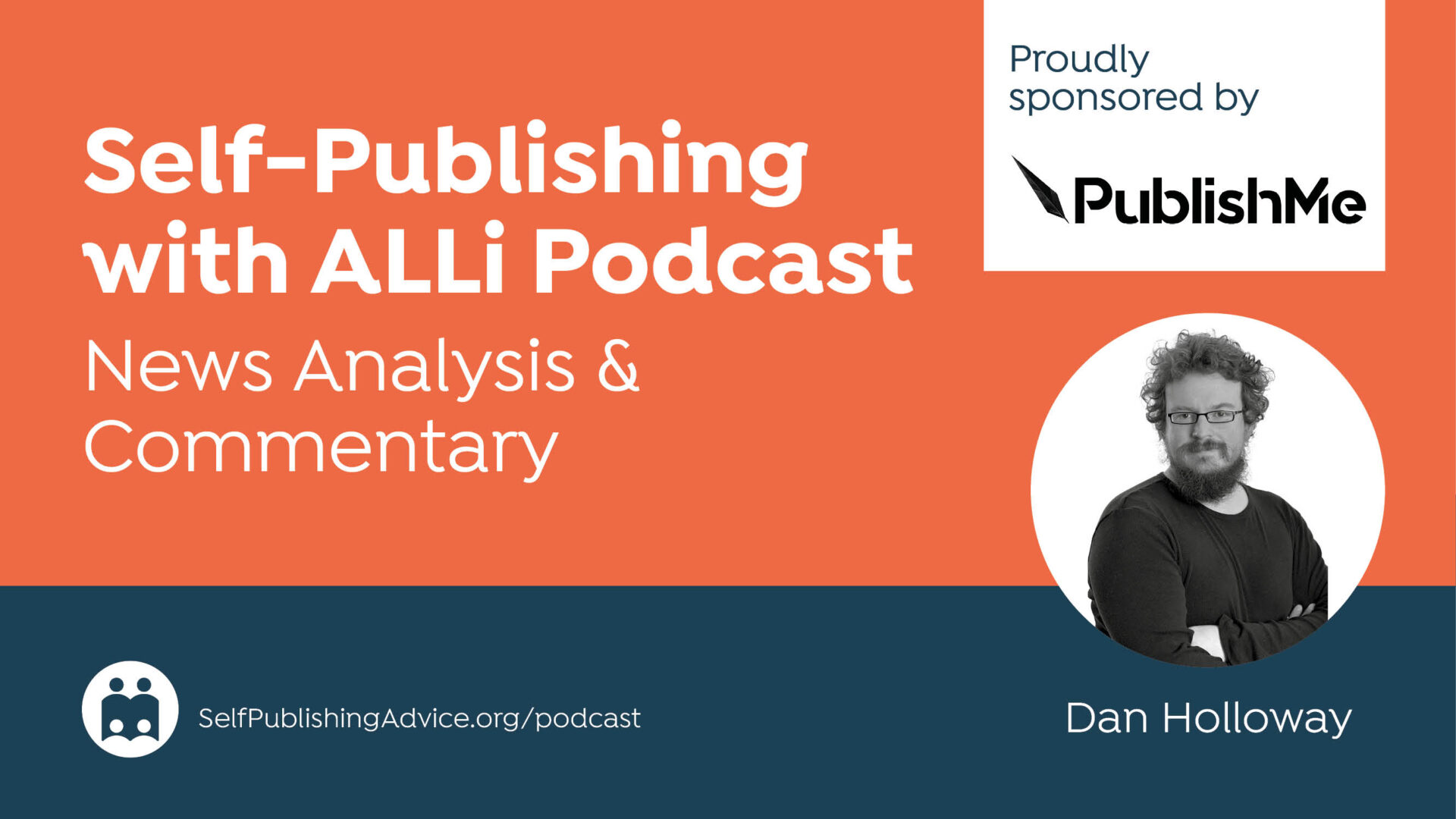
On this episode of the Self-Publishing with ALLi podcast, Dan Holloway breaks down two major Amazon stories, including a controversial change to Kindle’s DRM policy that will allow DRM-free books to be downloaded as EPUB and PDF files, raising fresh concerns about piracy. He also looks at Audible’s new partnership with TikTok to surface trending BookTok titles inside the Audible app, and examines Australia’s new ban on social media use for under-sixteens and what it could mean for book discovery, especially in YA and New Adult markets.
Listen to the Podcast: Amazon Changes Kindle Download Options
Sponsor
Self-Publishing News is proudly sponsored by PublishMe—helping indie authors succeed globally with expert translation, tailored marketing, and publishing support. From first draft to international launch, PublishMe ensures your book reaches readers everywhere. Visit publishme.me.
Thoughts or further questions on this post or any self-publishing issue?
 If you’re an ALLi member, head over to the SelfPubConnect forum for support from our experienced community of indie authors, advisors, and our own ALLi team. Simply create an account (if you haven’t already) to request to join the forum and get going.
Non-members looking for more information can search our extensive archive of blog posts and podcast episodes packed with tips and advice at ALLi's Self-Publishing Advice Center.
About the Host
Dan Holloway is a novelist, poet, and spoken word artist. He is the MC of the performance arts show The New Libertines, He competed at the National Poetry Slam final at the Royal Albert Hall. His latest collection, The Transparency of Sutures, is available on Kindle.
Read the Transcript
Dan Holloway: Hello, welcome to another week of Self-Publishing News. Apologies — my voice feels as though my throat has been scratched with sandpaper and washed out with bleach. I'll keep this brief as a result, but it has been quite a dramatic week in the news for the time of year. We're used to this time of year being about bestseller lists, Christmas gift recommendations, and year-end roundups. But there have actually been two really quite big stories from Amazon over the past week.
I'll start with the biggest, and the most controversial: the change to Kindle's digital rights management policy, or DRM.
DRM is the technology that basically stops people doing things with digital files. It's a way of protecting digital files so they can't be copied, shared, downloaded, or in the case of Amazon and Kindle files, increasingly transferred across devices. When you publish with KDP, you have a choice of whether or not to enable DRM. If you do, all of those restrictions are active.
Many people decide to apply DRM as a way of protecting their copyright and stopping piracy. But a lot of people decide not to — not many within mainstream publishing, though you may remember science fiction publisher Tor made it a high-profile thing about a decade ago that they didn't apply DRM. A lot of indie publishers don't apply DRM because they want to make it easy for people to download their work, read it offline, or switch between devices. Many have also decided there's no point in applying DRM because it's possible, albeit relatively tricky, to strip DRM from files anyway — it just alienates readers while the people who want to get around it can do so regardless.
But now, from January 20th next year, what happens to books without DRM applied is going to change. Up until January 20th, if you don't apply DRM, the proprietary Kindle file — I believe it's still Mobi — can be downloaded and used, but it's still a Mobi file. From January 20th, if Kindle books don't have DRM applied, readers will have the choice of downloading them also as an EPUB or a PDF. These are the two most widely used and universally readable digital formats. EPUB is the W3C standard online readable format and PDF is the standard format for print-ready digital files. Both can be read on many, many devices.
This has caused a lot of fury. The question many ALLi members are asking is very simple: will this make it easier for my works to be pirated if I do not have DRM enabled? The answer is basically yes. If someone wants to share your work without permission and breach your copyright, it will be easier for them to reach more people who can then read it on more devices without paying, because EPUBs and PDFs are so widely readable.
Some people have argued this will actually discourage people from not applying DRM — meaning more books will now have DRM applied, making this a self-defeating policy if Amazon's intent was to help more people read books freely across more devices. They'd be shooting themselves in the foot.
A couple of practical points to finish. This applies to new books published after December 9th — those will be subject to the new terms from January 20th. If you want to change the DRM settings for titles published before that date so they can also be downloaded as EPUBs and PDFs, you can do so in your settings, but it won't be done automatically. There is a helpful guide on Amazon explaining how to do that, should you wish to.
Audible Partners with TikTok: Best of BookTok
The other big story from Amazon is that Audible has partnered with TikTok to curate something called #BestOfBookTok. This is a section within the Audible app where you can find all the top trending titles on TikTok and download them directly from Audible. It promises a high degree of curation by micro-genre. Interestingly, when they give examples of micro-genres, they cite ‘romantasy' — which is not exactly micro anything, given that it's a whacking great commercial genre at the moment — and dark academia, which is more genuinely niche. But the idea is that you can find within the app the kinds of things people are talking about on TikTok, ready to purchase directly through Audible.
This is interesting because it's the sort of thing you probably couldn't have imagined a few months ago when the future of TikTok seemed very much in doubt.
Australia's Social Media Ban for Under-16s
The other major story of the past week is that Australia's social media ban has come into place. This isn't a ban of one platform — it's a ban on every social media platform for anyone under the age of 16. This is a massive development given just how big the book community on social media is for young adult fiction. It is likely to have a significant effect on how younger readers discover books and potentially on sales of young adult and new adult fiction, and other things that appeal to those audiences — exactly like dark academia and romantasy.
This has caused a lot of fuss. A lot of young creators in Australia are very unhappy. One interesting note: the ban applies to social media but not to gaming, even those forms of gaming that have very extensive in-game chat functions. So you can imagine reading communities migrating to gaming platforms and setting up new spaces there — because if there's one thing we know, it's that people who love creative things have creative ways of finding communities who share that love.
We'll see whether the ban stays in place and what impact it has as the new year unfolds. And with that, it will have been Christmas by the time I speak to you next week. So Merry Christmas in prospect. I look forward to speaking to you again for our end-of-year roundup. Thank you very much.