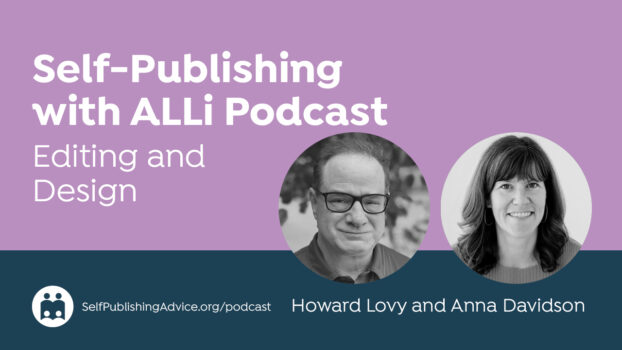
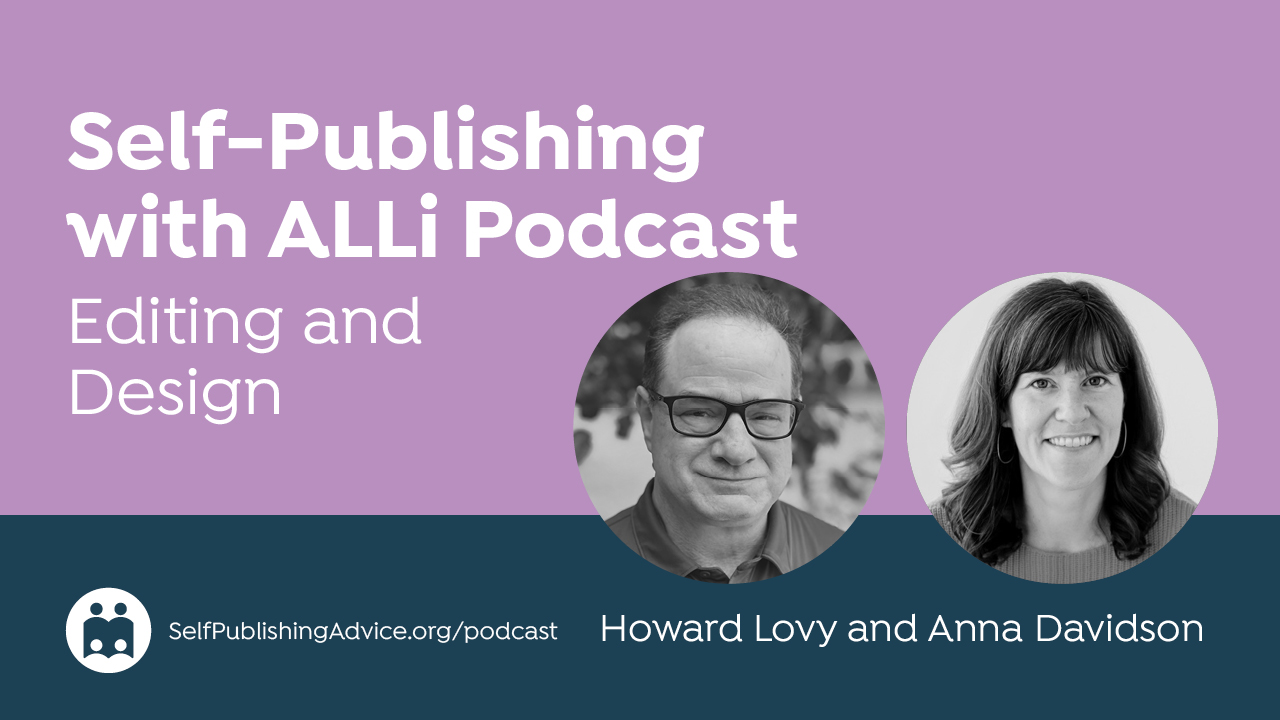
On the Self-Publishing with ALLi podcast, host Howard Lovy talks to poet and editor Anna Davidson about the art of editing poetry. They discuss what editors look for in a poem, why every word, line break, sound, and even blank space matters, and how editors can help poets strengthen their work without losing their individual voice. Anna also explains why trust between poet and editor is so important and how indie poets can find the editorial support that best fits their work.
Listen to the Podcast: What Makes Poetry Editing Different from Editing Prose
About the Host
Howard Lovy is an author, developmental editor, and writing coach with a long career in journalism and publishing. He works with writers at many stages of their careers, with a focus on helping them develop their ideas and strengthen their work while preserving their unique voices. He lives in Northern Michigan.
About the Guest
Anna Davidson is an editor, editorial trainer, writer, and poet who publishes under the name A. K. Davidson. She studied modern languages at the University of Oxford and has worked in trade book publishing for three decades. Her past in-house roles include head of editorial management at Faber & Faber and publishing manager at DK Books.
Anna writes poetry and fiction as A. K. Davidson. Her poems have appeared in Good Housekeeping, Pennine Platform, and other magazines, and her debut collection, Poetry for Life and Other Chronic Conditions, is available from all good bookshops.
Anna is an Advanced Professional Member of the Chartered Institute of Editing and Proofreading and a member of the Alliance of Independent Authors and the Society of Authors. She runs the Writer Meet Editor community on Substack, which offers information and connection for writers and book editors across traditional and indie publishing.
For more information, visit Writer Meet Editor or The Right Word.
Thoughts or further questions on this post or any self-publishing issue?
 If you’re an ALLi member, head over to the SelfPubConnect forum for support from our experienced community of indie authors, advisors, and team. Simply create an account (if you haven’t already) to request to join the forum and get going.
Non-members looking for more information can search our extensive archive of blog posts and podcast episodes packed with tips and advice at ALLi's Self-Publishing Advice Center. And if you haven’t already, we invite you to join our organization and become a self-publishing ally.
Read the Transcript
Howard Lovy: Hi, I'm Howard Lovy, and this is the Self-Publishing with ALLi podcast. I'm an author and developmental editor at howardlovy.com, and today we're talking about something I know much less about than prose editing: editing poetry. What exactly does a poetry editor do? How is the process different? And how can an editor help strengthen a poem without losing what makes it distinctive?
And my guest is Anna Davidson, a poet, writer, and editor, and we'll talk about what she looks for in a poem, how poets and editors can build a productive relationship, and how writers can figure out what kind of editorial help they actually need. Anna, it's great to have you back on the show. I say back because you were on my Inspirational Indie Authors show a few years ago.
Anna Davidson: It's lovely to be here. Thanks so much for inviting me on.
Anna Stumbles Into Poetry by Surprise
Howard Lovy: Sure. Well, let's begin with your background first. How did you first come to poetry, and what led you from being a poet and a writer into editing?
Anna Davidson: So my background is in trade publishing. I've worked in book publishing for many years as an editor and a managing editor, and I have always loved doing that and loved being an editor and always written in my spare time as well, whenever I had any. And then a few years ago, I went freelance to give me time to do some writing as well as do freelance editing, and that led me into writing poetry. I started off writing fiction, actually, and I still write fiction, but I stumbled on poetry by surprise as well and became a poet. I don't think anybody could've been more surprised than me that I became a poet. But yet, here I am.
What Makes a Poem a Poem
Howard Lovy: Yeah. And poetry for me is, like I said before the show, something that I played with when I was in college like all young aspiring writers do, and then I decided that it was all garbage and I threw it out. And that was my poetry experience. So I'm a prose editor, and I'll admit that I really wouldn't know where to begin if someone handed me a poetry manuscript. So what do you look for first in a poem?
Anna Davidson: It's such a fascinating topic. I'm so glad you're talking about it today. Because when I started writing poetry and looking into it, it's actually quite hard to find information about poetry editing. So there's a lot to think about. I mean, in terms of what you look for in a poem, that's something that people have spent centuries debating, really. That's part of the problem, isn't it? It's a great question. There's so much to consider when you're editing poetry or being edited that isn't the same as editing prose. I think people talk a lot about, what is a poem? That's a really big question that different people will answer in different ways. I mean, people will kind of agree, to a large extent. But one thing a poem isn't is it isn't prose. Because if it were, it wouldn't be a poem. It sounds so obvious when I say it out loud. But therefore you have to ask yourself, what is a poem doing as a poem that means it can't be written in prose? And in a way, maybe that's a starting point.
Poems Don't Just Arrive Perfectly Formed
Howard Lovy: Yeah. Well, I would tell e.e. cummings to use capital letters, so that's where I'm coming from. So, poetry can be intensely personal, and maybe there isn't a single correct way to write a poem. So how do you know when something needs editing rather than it's something that's simply reflecting the poet's individual voice or style?
Anna Davidson: That's a great question because I think a lot of people feel that poetry just kind of arrives. The poet creates a poem, it lands on the page, and there it mustn't be touched, that it's somehow precious or shouldn't be dug into or changed. I think it's easy to feel that that's what makes it a poem, that there's also almost something magical or mystical about it. But that's really not the case. Although I think some poets would say that some poems do just arrive perfectly formed, I think that can happen, often after many weeks, months, or years of thinking before it arrives to the page. I would say that most poets would probably say, “No, no, the point about a poem is that it's been so thought about, so crafted, intensely crafted,” that an editor can and will add huge amounts. You have to go through kind of ruthless self-editing for as long as you can, and then an outside editor can still add huge amounts.
Every Word, Every Blank Space Works Hard
Howard Lovy: So what kinds of things might you address at the level of an individual poem? Word choice, rhythm, imagery, line breaks, punctuation, all of the above, none of the above?
Anna Davidson: Very much all of the above, because I think the thing about a poem is that there is nowhere to hide with a poem. Every word has to work incredibly hard. I mean, you can say all of this about prose as well, but every word has to work incredibly hard. Every piece of punctuation has to work incredibly hard. Every bit of blank space has to work incredibly hard. That's probably a difference, isn't it, to prose. Although line breaks and scene breaks in fiction are obviously really important, it's even more the case in poetry that if there's some white space on the page, that's telling you something. The title of a poem, that's hugely important. What is that bringing to the poem? It's a whole piece of art that has to be kind of perfectly formed in and of itself.
A Single Line Break Doubles the Joke
Howard Lovy: Tell me more about line breaks. That's something prose writers don't ordinarily think about. What can a line break actually do in a poem, and when might an editor suggest changing one?
Anna Davidson: I love line breaks, partly because when I worked with the wonderful editor who edited my two poetry collections, I remember really clearly the first time she suggested adding a line break into a poem, and that was the only edit on that poem. But it changed it from being slightly funny to really funny, in this sort of miniature world that we're talking about. Just that kind of pause and that sort of ambiguity that the line break gave it, because you didn't instantly know where that thought was going. There was a line break that made the reader pause and think, “What's going to happen next?” And so when the joke landed on the next line, it had sort of double the power.
I think maybe one of the important things about a poem is how hard normally a reader has to work with a poem. Again, this can be true of prose, but then there are definitely degrees if you think how hard a reader has to work reading genre fiction, like a romance or crime or something, versus how hard a reader has to work reading literary fiction. They probably have to work a bit harder with literary fiction. Well, then with poetry, I think the poet really does need to involve the reader. So that it's as much about what the reader's bringing to the poem as what the poet's bringing to the poem, and that's probably a distinction you could maybe draw between poetry and prose. Maybe. I don't want to say anything too definitively because the poets will argue.
Howard Lovy: It's not even a distinction, because now you're starting to speak my language, because when I edit fiction or even some nonfiction, I ask writers not to say everything a character is thinking and feeling down to the last minutiae, because it's a conversation between the author and the reader. And readers get a little endorphin rush if they figure things out for themselves and not have everything explained to them at every level. And sometimes that can also apply to line breaks or even uses of ellipses. It could be dramatic, it could be humorous, like you said. So yeah, I guess you are speaking some of my language. I understand a little bit of it.
Sound Carries the Meaning
Anna Davidson: And I think the other important thing about a poem is its musicality, and the sound. You remember that's what you learn at school, isn't it? You learn about onomatopoeia and assonance and all of these things, and maybe it all seems a bit, why does that matter? But actually those things are incredibly powerful in expert hands. Whether a poem is in meter or not, it will still have a rhythm to it, and the sound of the poem should be a part of the meaning it's trying to convey. So that's obviously hugely important when you're editing as well.
Howard Lovy: Yeah. I feel the same way about fiction. There's a cadence to it. And then altering the cadence depending on what's happening is just as important as the word choices themselves. So how much attention do you pay to sound? Do you read poems aloud, and can hearing a poem reveal problems that aren't as obvious on the page?
Indie Poets Skip the Traditional Apprenticeship
Anna Davidson: Definitely. I mean, poetry is, I always find, a really interesting word, because when people talk about fiction, they tend to break it up, as I did earlier, into literary fiction, crime fiction, police procedurals, romance, genres and sub-genres. Whereas often people talk about poetry like it's just one thing. And I really feel there's room for so many different types of poetry. And I think this is particularly relevant to indie authors because the sort of traditional, in inverted commas, poetry world is quite closed in a way, in the sense that poets work for many years and work very hard to get published in journals and magazines and make a name for themselves. And poetry editors will edit their work in that way for magazines and so on, and they will build up very, very slowly towards a collection which will usually draw at least from some material that they've already had published in prestigious magazines and journals. Whereas obviously as an indie author you can just publish your poetry. You don't have to have been through that apprenticeship or that editing route. I find that very interesting, actually. And so there are all these different types of poetry, and obviously open mic poetry is a big type of poetry, and I love open mic nights where people will go and they will perform a poem that they've written and they've only ever read it to the mirror or their dog before, and then they will share it with the whole room. And that's incredibly powerful often. Really kind of raw poetry, but obviously not edited poetry, so I find that very interesting.
Howard Lovy: Yeah. Well, it's edited by audience reaction, I suppose. My daughter does some slam poetry on the side too, so I can relate to that a little bit.
Anna Davidson: And then it's very interesting when you try, as people often do, to put that slam poetry into a book. That can be quite hard. Sometimes that will work really well, but other times it won't really translate onto the page because the delivery is such an essential part of it. So if that's something you want to do, how do you work with that? How do you get it edited? That fascinates me.
Anna Writes for People Who Don't Read Poetry
Howard Lovy: As a poet yourself, what do you specialize in? Do you specialize in a certain type of poetry?
Anna Davidson: I heard a poet, Anthony Anaxagorou I think it was, talking on a podcast about how he dislikes the word accessible for poetry. I hope I'm not misquoting him. And how he would think of it more in terms of, there's aficionado poetry for people who really know, and then there's poetry for people who aren't aficionados, if you like. And I think that's a great way to think about it. And so I like to write poetry for people who don't necessarily normally read poetry. So it is something that, provided you know the context, you can grasp pretty well instantly. But then the difference between poetry and prose is that it will keep resonating with you afterwards, I hope. It might be something that you could repeat to yourself or that could pop up in your head a week later. And also the sounds and the form and everything also playing an important part in its message. And I do also like concrete poetry, where the typographical form… I mean, that's obviously another interesting thing for editors to think about, how a poem sits on the page typographically. That will also play a huge part. I find that really fun to play with, so I've done a bit of that. But I always want the poems to give something to the reader, whether that's comfort or a laugh or something. So I don't want to lock anybody out of it, but I do like that notion that you can get it, but then actually if you think about it a bit more, you realize there's even more to get. That's my ambition.
“Shouldn't It Be an Ode?”
Howard Lovy: Oh, yeah. That's great. If you read a passage, at least in prose in my experience, that is so perfect that you just want to keep reading it over and over again. I expect good poetry is the same way. So as a poet, what do you look for in an editor?
Anna Davidson: That's a great question. I suppose I've worked with the same editor, and I feel like this is true with any sort of editor, isn't it? You feel like it's somebody who really understands what you're trying to achieve and can help you make it better. And that is so important. And obviously, with poetry, somebody who really understands the sort of tools and techniques at the poet's disposal. I mean, my editor, in my second collection, one of her notes was, “Oh, you've written this lovely poem, but shouldn't it be an ode?” The poetic form, an ode. I just looked at that and thought, “Oh, my God, I'm so stupid. Of course it should be. Why did I not do it like that?” So I had a lot of fun recasting it as an ode. So, bringing that kind of knowledge. I usually write in free verse, but obviously forms are really fun to play with as well.
So you do need to bring all of that knowledge and that understanding as well of how far to push something. Because it goes back to that thing of, with a poem, you can just write quite a simple image and the reader gets it, and that's lovely. But it might be that with a poem you can go a bit further. So again, as we were saying before, so that the reader just has to work that little bit harder. And then the harder the reader has to work, the better it feels when they get it. But obviously knowing how far you can push something before you start baffling the reader can be quite tricky sometimes. So an editor can be really helpful for that.
Howard Lovy: Make the reader think, but not make them too confused.
Anna Davidson: Yeah, exactly, not shut them out completely. I think that's quite a hard balance to strike, actually.
Trust Drives the Poet-Editor Relationship
Howard Lovy: Yeah. You mentioned the author-editor relationship is important, that they have to really get each other, and I find that's true with prose also. Before I take on a client, I usually have a Zoom meeting with them and just make sure that we're on the same page, literally and figuratively, that we understand each other, what I do as an editor, and I'm there to help them bring out their own voice and not to insert my own voice. How important is that author-editor relationship with poetry?
Anna Davidson: I think it's essential, and I agree with you. I think it's essential for fiction, memoir, poetry. And particularly poetry, I suppose, because it's so often very raw. Well, it should be raw. It's kind of a soul-to-soul connection, I think, when a poem resonates with you. And so you really do need a lot of trust. I think that's very hard to find, actually. I mean, with my editor hat on, I've recently launched a Substack community called Writer Meet Editor because I just think it makes such a huge difference to work with somebody who is completely in tune with your creative vision and what you're trying to do. And it's not always easy to find that person, in my experience. And so I really felt there was a need for this very personalized community of writers and editors looking to work out what sort of editing they needed and what sort of editor that was, and finding different editors and finding different writers and working out who they were in tune with. That's how strongly I feel about it.
Writer Meet Editor Brings Both Sides Together
Howard Lovy: Well, that's great. Writer Meet Editor, is that sort of a mini writer-editor matchmaking service, or do you write advice, or bring people together in the comments?
Anna Davidson: All of that. So one of the things that I do is I interview editors and I interview authors and poets about editing and being edited, because I think sometimes, especially in the indie world, there's not really a “you must do it like this, you must be edited like this.” It's more about looking at what you're trying to write and achieve and working out what you need personally. So I think by doing interviews with editors and doing interviews with writers and poets to find out what their experience of editing has been like, that gives you inspiration. Oh, well, that poet did it like that. That's what she did. Or that editor works with clients like that, but this other editor does it like that. So I do interviews, and I also do informative posts about how editing works and how much it costs, and also, yes, through the chat, and also there's Zoom drop-in sessions for people who want to come along to that and just chat. Because if you're a writer, it's quite hard to find editors you can just chat to informally. And then for editors, it's really interesting to chat to writers informally at drop-in sessions about what you're working on, what you're grappling with at the moment, and just sharing a dilemma and seeing what writers and editors have to say about that. It's really valuable, actually, for everybody. And fun.
Howard Lovy: Are there any common questions that come up?
Anna Davidson: There's lots of questions about publishing and querying and indie publishing and how that all works and how to do that. I'm just trying to think what we were chatting about last week. I mean, there was a manuscript that felt a little bit flat. So a little bit sort of tell rather than show. It's great to get different editors' perspective on that and different writers' perspective on that. Everybody has so much to offer there. And I do think with poetry it's particularly interesting as well, because poetry is so unique. There's definitely no one-size-fits-all answer to poetry editing.
The Commas Are the Developmental Edit
Howard Lovy: Well, I was going to ask, in prose there's different levels of editing. We talk about developmental editing, line editing, copyediting, proofreading. Are there different levels of poetry editing?
Anna Davidson: That's such a great question, and that's what I absolutely wanted to find out when I started. It depends which poetry world you're in, I would say. So if you're a poet seeking to get published in the prestigious journals or be published by the leading poetry publishers and so on, then the editing will happen really broadly as one hit. Because obviously, there's not a developmental edit and then you fix the commas, 'cause the commas are the developmental edit, if you want to think of it in those terms. So it's a kind of a one-edit stage. And then obviously you've got to prepare the manuscript for publishing and proofread it. For poets who've written a collection of poetry and want to publish it, then they can very much have a sort of a copyedit, I suppose. But anyway, to answer your question more coherently, if we're talking about a book, then the first stage, it's almost the opposite in a way to fiction, because each poem has to be as excellent as it can possibly be. And then you need to figure out what the shape of the collection is, if you like. So basically what order you put the poems in.
Howard Lovy: Yeah. Right. That makes sense.
Anna Davidson: ‘Cause that will obviously make a huge difference, every possible difference, to how you read the individual poems, the context that they fall in.
Howard Lovy: Right. I'll bet order and appearance and typography, that all goes into it.
Anna Davidson: Exactly.
Poets Find a Warm, Welcoming World
Howard Lovy: More so than in prose. Well, we'll include your Writer Meet Editor Substack in our show notes. Is there anything else that you want to say in terms of advice for poets who are seeking editors?
Anna Davidson: I think the wonderful thing I found about the poetry world is that it's a very warm, welcoming world. There are poetry societies and things that you can join, and you'll likely find other poets who are happy to workshop and peer review, and that can be incredibly useful in terms of just getting feedback. As with any workshopping and peer reviewing, you have to take what's useful for you. But I think poets will put a lot of thought and consideration into doing that. So once you feel that you've self-edited as far as you possibly can, that can be useful. There's a really wonderful book, actually, that's called The Process of Poetry, which has got no connection to me, but I just love it, and it's interviews with really established poets like Don Paterson and John McCullough and all sorts of people. And it shares their first drafts and their final drafts, and talks about how they got from one to the other. So that's a very interesting read for anybody who wants to know more about poetry editing and crafting.
Howard Lovy: Wonderful. Well, thank you, Anna. This has been educational for me, since this is a world I know very little about, and I appreciate you taking the time to talk to us about poetry and editing poetry.
Anna Davidson: Wonderful. Thanks so much for having me.
Howard Lovy: Thank you, Anna. Bye.
Anna Davidson: Bye-bye.