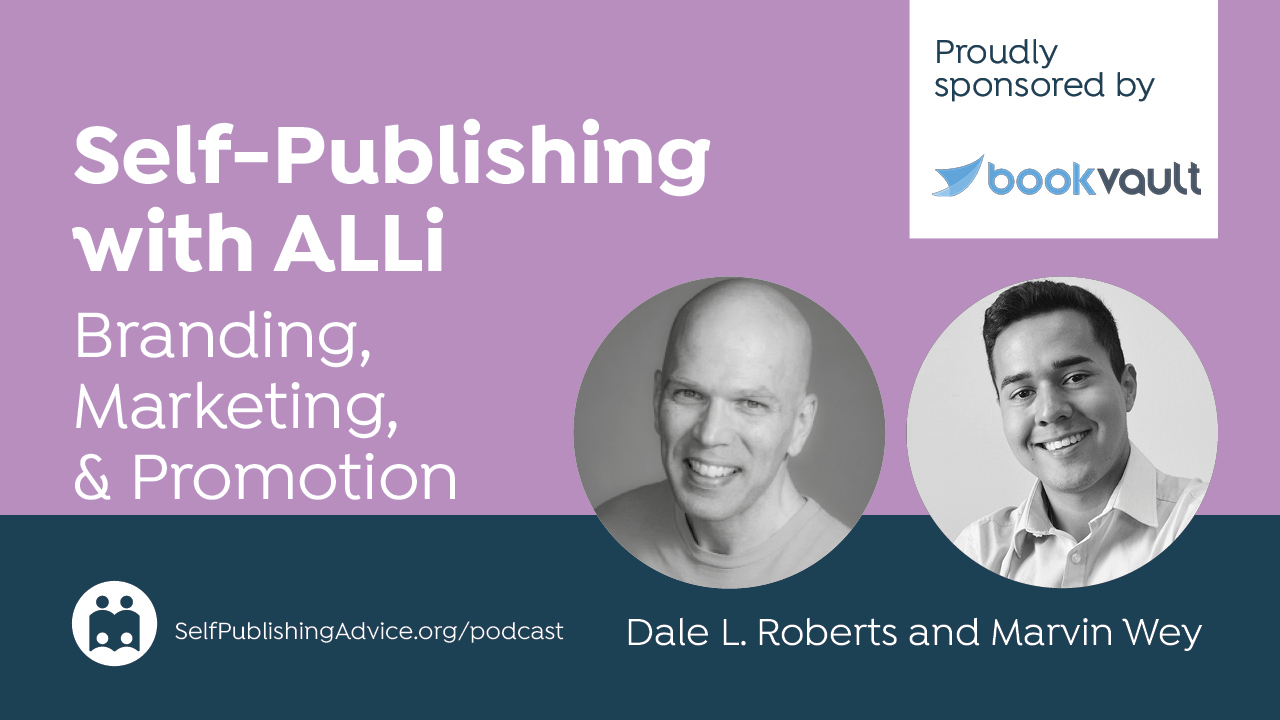
Are you struggling to reach readers on TikTok? In this episode, Dale Roberts sits down with Marvin Wey of AuthorScale.com to explore how authors can use slideshow content to turn browsers into buyers. Discover why volume matters more than perfection, how storytelling trumps flashy production, and what metrics really define virality. Marvin breaks down the slideshow strategy that’s helping authors drive engagement, build curiosity, and sell more books, all without burning out or breaking the bank.
Listen to the Podcast: Unlocking TikTok—the Slideshow Strategy for Authors
Thoughts or further questions on this post or any self-publishing issue?
If you’re an ALLi member, head over to the SelfPubConnect forum for support from our experienced community of indie authors, advisors, and team. Simply create an account (if you haven’t already) to request to join the forum and get going.
Non-members looking for more information can search our extensive archive of blog posts and podcast episodes packed with tips and advice at ALLi's Self-Publishing Advice Center.
And if you haven’t already, we invite you to join our organization and become a self-publishing ally.
About the Host
Dale L. Roberts is a self-publishing advocate, award-winning author, and video content creator. Dale’s inherent passion for life fuels his self-publishing advocacy both in print and online. After publishing over 50 titles and becoming an international bestselling author on Amazon, Dale started his YouTube channel, Self-Publishing with Dale. Selected by Feedspot and LA Weekly as one of the best sources in self-publishing of 2022, Dale cemented his position as the indie-author community's go-to authority. You can find Dale on his website or YouTube.
About the Guest
Marvin Wey brings over ten years of experience in book publishing and growth marketing. In 2016, he joined one of today's most successful publishing startups and fiction reading apps as one of its earliest employees. Now, with his new company AuthorScale, he and his team are developing cutting-edge tools to help indie authors leverage technology to revolutionize their book marketing.
Read the Transcript
Dale L. Roberts: TikTok is a short form video platform with millions of daily users known for everything from entertainment to education. While it started as a hub for viral dance trends, it has since grown into a place where creators of all kinds share content, including authors looking to promote their books.
In this episode, I speak with Marvin Wey, the founder of Author Scale, about a creative book marketing strategy that involves using slideshow content on TikTok. Yeah, I was blown away when I heard it, and I thought it was too good to be true until I sat down with him. We explore how the format works, how it can be used to capture reader interest and what authors should consider before diving in.
Let's go ahead and dive into this interview now.
What is the Slideshow Strategy?
Dale L. Roberts: Okay, Marvin, you and I got connected through some of our mutual friends at the Alliance of Independent Authors, so I am really geeked up about two items you shared and that you're crushing it on TikTok, but with this strange slideshow type element that is selling more books.
So, let's walk it back. Share with me just a big macro view, an overhead view of what this process looks like and what it means. Because man, when you shared this, I was like, I want to hear more.
Marvin Wey: Sure. First of all, thanks Dale, for having me on the podcast.
Slide shows are basically a piece of content that narrate a scene from the book.
It could be any book, could be any genre, but it's basically like a book trailer narrated through a sequence of text distributed throughout different slides.
When you talk with regular people about the slideshows, they mean usually like a carousel, like different pictures and you showcase some vacation pictures, but in the context of BookTok, this is basically narrating the scene of a book in a very, let's say, lo-fi production. It's just text on top of an image and then four or five or 10 or 15 or 20 slideshows.
Now, what seems very lo-fi let's say from the surface, is actually a lot of work because you need to brainstorm the hooks, right?
People on TikTok or on Instagram, they have like attention spans of a goldfish, right? So, they keep scrolling and keep scrolling. But luckily there is this BookTok or Bookstagram bubble where people recognize bookish content. So, if they're into books, they will give it a shot.
They will say, this I recognized, because it's been a trend that has been going for a couple of years now.
Maximizing Engagement
Marvin Wey: So, if your opening line is good, if it's something that you can relate to or you maybe feel in the scene, it's like a POV situation, imagine that your boyfriend just broke up with you, and something like that. Okay, wait a second, and then you go to the second slide, and you get hooked. Then you want to learn more about the book, and you find out it's a book. You go get it, you buy it, or it's on Kindle Unlimited and this kind of strategy has catapulted a lot of indie authors to the top charts on Amazon because they were able to find a systematic approach to it.
They were churning out three or four slideshows a day across different accounts, and when you start doing that, every slideshow is like a lottery ticket, right? So, you start building up an account with a reproducible strategy where you don't have to show your face. So, authors are, especially fiction authors, mostly shy personalities; they really jumped on that.
Then there were a lot of examples two or three years ago where authors went viral and had a post reaching a couple million views and their book reaching the number two or three overall on Amazon, and then authors started copying that approach.
I think now we're getting into the story of what we are offering as a company, but in the macro context to answer your question, this is what slideshows are in the book context.
Dale L. Roberts: Very interesting. Now, these authors, are they just strictly publishing these slideshows on their TikTok feed or other vertical video, short-form platforms?
Is that all they're doing or are they mixing it up and putting some other things in there as well?
Three to four, that's a lot of content throughout the day, and I'll get to that of course, obviously in a bit.
Marvin Wey: What authors started doing is usually they have their author accounts, their pen name account, and they have other accounts where they're mimicking some reader account, right?
The account could be called Dark Romance Reader 27. So, it's basically that they're. pretending to be a reader, and it's just this type of content, there is nothing else. If you scroll through it, you see the pattern, and it's no secret, right? When authors ask me, how does it look like? I tell them, go to the top charts on Amazon in your niche and just check out the top 20 authors on TikTok. Just Google their name, TikTok, check what they're doing. Chances are many of them are utilizing that strategy, so you should too.
Dale L. Roberts: Interesting.
Technical Aspects and Tools
Dale L. Roberts: Now, when you're talking about slideshow, how are we producing the video?
Is it strictly through the slideshow that we're creating video, or can we use other things like say Da Vinci Resolve, or Camtasia, or even iMovie?
Marvin Wey: Those are editing tools, editing tools that you don't need for this. So, this is really lo-fi.
Dale L. Roberts: Toss it out the window. All the training I've had over the last 10 years now, it's no longer needed.
Marvin Wey: There is, and I have a background in publishing for over 10 years. When I worked at one of the big greeting apps, we had a lot of funding from investors, we did those fancy trailers with stock video or sometimes we hired actors, like epic trailers with crazy cuts to the beats and then you would publish them; nothing happens.
Dale L. Roberts: Nothing. Crickets.
Marvin Wey: Then we're also jumping on that slideshow trend, like some texts on top of a kind of pixelated image, went viral.
So, it's really crazy how you can ditch your professional editing skills and just focus on storytelling. This is the magic of hooks. Readers are reading for a reason, they're reading words. So, it's not about, a movie that we're trying to pitch, we're trying to pitch a book. A book consists of letters, so it makes sense to use the letters to pitch the book in a compelling way.
Dale L. Roberts: So, the focus is more on the text than it is on like the visual aesthetics. Let's get the text up there, so that it's readable and people can read along.
Now, question for you would be, do I put narration along with that text that's appearing on the screen during the slideshow, or is that something that you automate through, say digital voices? Like AI voice, if you will?
Marvin Wey: The posts that were referred to, they don't have narration. We're experimenting with narration, especially for audiobooks. Obviously, you want to mimic the feeling of an audiobook, but right now, let's say for just written books, it's enough. You don't need a voice. It would be an overkill. People are not expecting it.
Dale L. Roberts: Interesting. So, it's almost like they're scrolling through, they see that visual aspect and go, okay, this is about a book, let me slow down and read this.
Instantly makes me think here, is there a specific pacing that we want to follow, because obviously if we're sharing like snippets from our book, we probably don't want to have five paragraphs on one page, right?
Marvin Wey: Let's say you have 10 slides in a slideshow, obviously, you want the first few to be super short, digestible, right? But as people invest more time in the slideshow, you can afford to get longer and longer, which in turn will make people stay longer on the post, which will signal to the algorithm that people stick around. So, probably it's a good post, so let's show it to more people, and you will be probably going more viral, right?
When I talk about slideshow, it can be like an actual slidable slideshow, but it can also be a video. Some authors did like book flipping backgrounds where they would just take a book record their hands, how they flip through the pages, and then they would put the text on top of it and the text just appears on a video.
I also refer to that when I mean slideshow and there was a trick where people would, in the last two seconds, they would show a long paragraph of text, which obviously wasn't enough to read, so the video would start again.
Dale L. Roberts: Oh my gosh, that's genius.
So, then they're having to go back and watch it through all over again increasing your watch time.
Now, I'm nerding out on things like this because all video platforms function on watch time. If you can get a viewer to watch longer, the platform's going to reward you with even more viewers.
Oh my gosh, it's sneaky, but highly effective because you're building it up in small bite-sized chunks, and then we get to the last one and oh my gosh, I didn't read it, ah, okay, I’ll go back and read it now.
Hence why I think that voiceover, putting it in there, probably will ruin that because obviously you need to go through and rush through. Whereas it almost seems oh gosh, that person did a slight error. They put three paragraphs in that last one. Let me watch it all the way through so that way, see it again. This is absolute genius level.
Now, you have to give me another one because that right there is an amazing tip that you can use on any platform.
He's thinking about it. Obviously, I’ve put him on the spot and I'm sure you don't want to give away too much because no one's going to come to get your services if you give all your secrets away, right?
Marvin Wey: No, we try to be pretty open about sharing as much value as possible because there's always a new strategy.
Right now, we see a trend to longer slide shows, like 25-30. I think the maximum on TikTok is something like 30 or 35 slides.
Basically, you increase this by just putting more slides.
Dale L. Roberts: What would you say is the ideal length for a video that functions the best?
Obviously, we can do, I think TikTok allows up to, what, 10 minutes? And you can have anywhere from 15 seconds or greater, if I can recall or even less than that if you wanted to. So, what is the ideal length? What have you found converts the best?
Marvin Wey: I guess the ideal number changes over time.
When we analyze the markets, we look at the average and median length of slideshows, and right now it seems to be at 25. So, from the accounts that we analyze it's getting more and more.
Dale L. Roberts: So that's 25 slides. How long is that altogether for a video? Is that something that you've ever tracked?
Marvin Wey: I would need to check the number right now. What I have in mind is just the number. I'm talking about image slideshow, so 25 images, but then the video would be probably over a minute or something.
Dale L. Roberts: Okay. So, it's going at a pretty good clip with that specific one.
So, we should try to aim maybe for a minute or so. Is there a sweet spot below that or is there something better than that?
Marvin Wey: It depends on the genre, right? I'm always hesitant to give like a genre general advice because it's very specific to the genre that you're writing.
There is also examples of slideshow that went viral with two slides where it's just an image and some hook, but it just goes viral sometimes.
I spent the last few years trying to study virality and now you know the formula, but then you see an example where it doesn't happen.
So, it's also a lot about trial and error. I think if I learned something about virality, it's that the platforms reward you for usage and obviously they want to reward the creators that are on the platform trying to put some love into it. It also comes with very normal stuff, like engaging on your account, following other people, providing value, commenting on their posts.
This is something that sometimes authors neglect, right?
When they hear me talk about slideshows or they hear other authors and they check their accounts, they think, okay, I'm just doing this once a day, and then I'm just going into TikTok, posting it, going out; nothing will happen and then they're disappointed.
But it does take the work, right? So, you can automate some parts of it, but some parts you will never be able to automate. Otherwise, TikTok would think you're a bot, and obviously we know what happens to bots, right?
Dale L. Roberts: They want you to be fully engaged in their platform and not just showing up, eating the all-you-can-eat buffet, and then bouncing. So, it's so important that you do engage with other authors that are probably doing the same thing, people within your niche.
This leads me to another question that pops up off the top of my head and it's metadata. How are you titling it? Are hashtags relevant, and of course links? How are we getting people from TikTok over to our book? Are we setting up a TikTok shop or are we verbally saying go pick it up on Amazon? How does that look?
Marvin Wey: About metadata, I think it was the Instagram CEO himself who made a post where he said, hashtags don't matter at all. You can look it up on his profile. I haven't seen a statement by TikTok, but what we do is three to five, maybe six, seven hashtags, but I don't think hashtags play a huge role. Those platforms get better at the semantic understanding of what your post is about, and their goal is to serve it to people that might be interested in it.
They're getting better at understanding what this post is about and serving it to a subset of people.
If they like it, they will give it to more people. That's with respect to metadata.
We've seen people putting too much effort into, so rather spend the time on churning out as much content as possible and don't over obsess over hashtags.
If the hook was perfect, like rather have three mediocre hooks than one perfect hook.
Dale L. Roberts: Okay. It's about getting the volume up that we see the real success come through. It's showing up to bat as often as you possibly can.
Now, would you discourage somebody away from doing one per day if that's the only time that they have?
Marvin Wey: I'm biased because I represent Author Scale, and we have this tool where authors can upload their manuscripts, and the tool spits out the posts for them.
Dale L. Roberts: Get out of here! That is amazing. So, it automates most of this anyway, so that removes a lot of that friction then.
Marvin Wey: Yeah. So, there is no excuse to not be posting more. Because it's literally, upload your book, the AI scans your book, and then finds the scenes in your book that are marketable and then turns them into slideshows already with background images and there you are.
You just have to post them.
Dale L. Roberts: Wow. Oh my gosh.
Driving Traffic and Sales
Dale L. Roberts: Alright, so back to the one question I lumped in with the other ones, which is, how do we get our viewers from TikTok to buying our book? Are we putting the link inside our metadata or are we saying it inside the video? How does that look?
Marvin Wey: So, in TikTok, if you have more than a thousand followers, you can put the link in the bio.
Dale L. Roberts: Even if you don't, what authors tend to do is they have a Linktree where they have different books, their website, their newsletter, different things. So, the interesting thing is that when there is a viral post and you see the royalties go up on Amazon and you analyze how many clicks you had on the Linktree, it never matches up. It's always a fraction, which means that Amazon has such an authority in the space. If people know it's a book, they go to Amazon and they search it there. They don't even need the link.
Marvin Wey: Not even Google.
Back to your previous question about another kind of algorithm hack. I have another one that came to my mind, is not mentioning the book title at all for a day, right? Because if it's a good slideshow, people will ask in the comments, what's the book?
Dale L. Roberts: Oh my gosh, that's genius, because then you force them to go and ask and then, of course, that engagement increases it, boosts relevance and serves your video out.
I'm telling you, right now, you've given me two tips that I believe will not just work on TikTok, it would definitely work on a place like YouTube shorts or even Instagram reels.
Marvin Wey: You have to find the sweet spot because people also get angry.
They're like, Jesus, just reveal the title, and then there are 20 people commenting, and you go in, and you reply to them. As soon as you reply to them, nobody else will ask anymore. So, you gave it this initial boost of people asking and the algorithm knowing, okay, people are engaging, people are asking something here.
That's also a really good strategy.
Dale L. Roberts: Oh my gosh. It's withholding that information. They're already hooked, they're engaging, and then when they find it out, they go look for it. I think that's just simply stellar. There are, over on YouTube, something very similar, where there will be like movie summaries.
Every now and then I'll go check out movie summaries, but they won't have the title inside, the title of the video. It's ‘man loses his head in this movie', and I'm like, oh my gosh, I better go and watch it, and I'm like, what's the name of this movie? And of course, naturally, where do I go? I go to the comments.
That's where I will see the answer. There's the title to the movie. Oh, it's deliberate.
There's probably some people here listening to this right now going, oh my gosh, what are they doing? But to me, I feel like it's a great way to get people engaging without weird clickbait titles or anything else like that. It's getting it to where they engage in an honest way.
Alright. So, getting them from the TikTok over to Amazon is way easier to know. We can have that Linktree, sure, it's going to drive some traffic. But a lot of the traffic is going to come organically speaking because people are just going to go look for it.
Especially if you go wide. So, have you found much success for authors that are publishing wide using this strategy. Meaning that, are they seeing library sales? Are they seeing more sales beyond Amazon?
Marvin Wey: Yeah, that's happening. Definitely. So, authors report when they have a viral post, if it's a super viral post, even another book that they didn't even promote will get a spike. Especially in romance, those readers
read, I don't know, five books a day, it feels like. So, they already read the series, and then they're like, oh, I want more of this author. Oh, there is another book there, and then some authors have a hybrid strategy where they're partly KU and partly wide. So, it is basically virality and then you just decide where to redirect the traffic to.
It just happens that Amazon is the default go-to. It's harder. now. We're experimenting with Kickstarter, so driving traffic to a Kickstarter. This is really in the beginning, so I cannot say too much about it, but if it's about redirecting traffic somewhere else, it's always a bit harder. Amazon is definitely the easiest.
Dale L. Roberts: Very cool. It's good to know that whether we're exclusive to Amazon or publishing elsewhere, this is going to work regardless.
You've brought up a word, time, and again, and I hate to sound like a boomer, but maybe we've got to break it down here on this one: going viral.
What does going viral mean and what's the metric that we need to pay attention to in order to know that we've gone viral?
Marvin Wey: What people mean when they say it went viral is that it reached a lot of people with little marketing effort, with no budget, so to speak. So, Facebook ads doesn't go viral. You just spend more and you reach more people.
But an organic post, like a slideshow post. if you only had 300 views per post and then all of a sudden you have one reaching 20,000, this author will already say, oh my God, I went viral. So, it's always a relative game, but what we refer to when we say viral, it's six figure view numbers.
Dale L. Roberts: A hundred thousand or greater. It is very interesting. Now, what if a video doesn't go viral? Can I still expect to see some results from it, or do we have to go viral in order to see book sales?
Marvin Wey: There is a strategy when you have one account, and you post three times a day and you only get 500 views on each post; you will still see an increase in your sales.
That's the beauty right now of TikTok especially, that if you put out a piece of content, you will immediately get 300 views. Unless something is happening and you're shadow banned or something.
But those 300 views, there is even different businesses that are capitalizing on it. They're not going viral, but they have let's say a hundred freelancers that are taking a book and posting on five accounts on each freelancer.
So, they have every day 3000 posts going out, and they only have a couple hundred views, but they accumulate. Obviously, if you have one viral video, this will have an even greater spike in royalties than a few small ones stacking up. So, there is this effect also.
Consistency and Automation
Marvin Wey: But that's why I'm so bullish on the slideshow strategy because when authors start using our tool and they get help with the posts and they post three times a day, they already made the money back that the tool costs and they're motivated.
Many first-time authors have never seen any kind of interesting numbers on their books, so anything is really worth it on that end.
Dale L. Roberts: That's good. So, authors shouldn't be discouraged if they're not seeing viral numbers, because there's going to be a compounding return as long as they stay consistent with the volume of uploads daily.
Marvin Wey: Obviously you want to see progress. So, you cannot stay forever in the 300-view jail is what they call it. What people report is when they hit a video that reaches a thousand views, then the next videos are also more likely to hit a thousand views, and it's a gradual increase.
But again, it boils down to being consistent on the platform and putting some love into the accounts. This is never going to be automatable.
Dale L. Roberts: Very cool.
Now, we're going to obviously talk a little bit about Author Scale before we disconnect here. If someone were to say, right now, I just don't have any money right now to invest in your software. What's the best first steps for them to take?
Is there specific software like Canva, PowerPoint, keynote? What is the software we would want to tap into?
Marvin Wey: Canva, there's a free version. What I would say is, first of all, it starts with writing books. It takes a completely different mindset, writing a book versus writing a hook.
When you're writing a book, you're in your artistic world and you want to build the world and you're super creative, but hook writing is marketing. It's like, how do I capture attention? So, many authors already struggle on that.
The smart authors are the ones with marketing in mind. They already write the book with marketing hooks in it. They write the book and say, okay, this I'm going to use for marketing. This is a scene that I want to use for marketing.
Dale L. Roberts: I think you've been paying attention to me behind the scenes; that's what I've been doing. Nonfiction, it's easy to do that way.
Marvin Wey: Exactly. Even in fiction, you have this scene where this happens. So, if you do that it's better because you already know how to market it.
But most authors are like, okay, so now I have this book, now how to market it? Then you have to teach them how to do hook writing.
So, there's still a big controversy about AI in the author world especially, but it's loosening up a bit, people are accepting it more and more in the process.
I wouldn't use the free version of ChatGPT or so, because anything you upload there is going to be used for training purposes. You need to be using professional APIs to opt out of this.
If there is an AI that is free that doesn't use your book for training purposes, because that's what people hate, you can use it as your sparring partner. You can upload chapters. Hey, here's a chapter, please let me know a hook that I can use for marketing, and then you prompt it a bit about what's important in marketing. It's important that the first hook is great. You do this, you come up with your own prompt, and then it gives you a couple of ideas.
Then you're going to start learning about hook writing, so how it is to write hooks and then the next step is assembling the post. So, basically you just take the hooks, you distribute them across different slides. You go and find a stock image that kind of represents the mood of your slideshow.
Some people go to Pinterest. I'm not promoting this because this is a kind of copyright, but a lot of people do this. They just go to Pinterest and there's beautiful images. They take it and then they put the text on top of it and that's it. Go to TikTok, open the app, use the image, write the copy, paste the text on each slide. Pick a sound. A couple hashtags, post it. Do it once a day. It will cost you maybe half an hour. But this something that anyone can do.
Dale L. Roberts: I tell you; we can talk about this all day long. We're getting to the end of our half hour here. I do appreciate you sharing the fact that some people can do it on their own, but of course, if they want scale it, you obviously have the answer.
So, how can our listeners get in touch with you, find out more about your services and whatnot? And of course, if you've got anybody that you'd like to shout out here on the ALLi episode, let me know.
Marvin Wey: People can get in touch with me via [email protected]. Or just visit authorscale.com and reach out to support or in our Discord group. We have a very active Discord group that you can just DM us directly. Basically, what we do at Author Scale is we help you automate this entire slide show strategy that we were just talking about. You just upload your book; we have very secure APIs to all the AI's. None of this is going to be used for training purposes. We don't store anything beyond your permission. You can delete the book at any time; you can also just upload a couple of chapters. Then you click a button, and the slides are being generated. Next step, you pick the images. There is also an AI integration that puts the images right away. Then there is a TikTok integration where you can click a button and then it lands in your TikTok drafts. So, you basically work on your computer let's say for an hour, you finish 20 slideshows, you send them all to your TikTok or you schedule them out.
You say, today, send me five, tomorrow send me five. The next day, send me five. So, then you're covered for the week. You will get the notifications to your TikTok, and you can just post them manually, and focus on opening the app, engaging, and following the right people, and learning from other authors also.
So, that's what we do at Author Scale. We're happy for anyone to get in touch if you want to try the service. Also, we can arrange a free trial if anyone needs it. We have a free trial anyway, so you can get a couple of slideshows for free before you have to commit to any payment.
Dale L. Roberts: But we're super flexible. We're trying to provide a great service and especially we're trying to make authors more money than it costs them to use the tool. So, this is only a win-win. Sounds good, Marvin, thank you so much for your time today.
Marvin Wey: Thanks, Dale, for having me.