As indie authors expand their careers, many discover that one name doesn't always fit all. A romance author might pivot to horror. A nonfiction writer might decide to finally publish that novel. Or someone who writes across genres may wonder whether each audience needs a different kind of branding. The result? Writers are managing multiple identities—some under different pen names, some through distinct imprints, and others just by shifting tone and voice depending on the context.
But is it necessary to divide your writing life? That depends on your goals.
Separating identities can bring clarity. Readers know what to expect, marketing becomes more focused, and retailers like Amazon can more accurately recommend your books to the right audience. Some authors also value the creative and mental separation—using a pen name or a new platform as permission to write differently. Others use multiple names out of necessity, whether for privacy, cultural reasons, or a legal name change.
On the other hand, juggling identities can double your workload. Multiple websites, newsletters, and social channels mean more content to create and more reader relationships to maintain. Some authors find that a unified brand—one voice, many genres—is simpler and more authentic. If your readers trust you as a storyteller, they may follow you across categories, even if they don’t read everything you write.
There’s no single right way to approach it. But there are plenty of smart, creative strategies. Here’s how a few ALLi members have found their own balance.
Joanna Penn: Two Names, Two Brands, One Organized System
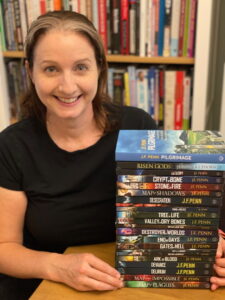
Joanna Penn
Joanna Penn maintains two distinct author identities—one for her fiction, one for her nonfiction—and keeps every element of each brand separate.
“I split my author brands back in 2014 when I realised how different my audiences were, and how my books offered a different promise to the reader,” she said. “As J.F. Penn, I offer escape and adventure with an edge of the supernatural, which covers my thriller, crime and horror fiction, as well as travel memoir. As Joanna Penn, I offer inspiration and information to authors, in particular, with my books, webinars, and speaking.”
She’s built two complete ecosystems to support each identity. “I have separate websites, separate email lists, separate social media, and I even schedule my time separately,” she said. “I also now have two podcasts, The Creative Penn for authors, and Books and Travel, under my J.F. Penn brand.”
“It’s certainly a lot of work to actively maintain both author names at such a level,” she said, “but it helps me keep my brand promise to my readers, as well as ensure the book retail algorithms understand the types of readers to show my books to. I also enjoy the ability to focus on the different sides of my creative personality under different names.”
Robin Phillips: A Pen Name Rooted in the Past

Robin Phillips
Robin Phillips uses a pen name—but not for the usual reasons.
“I only have one author identity, but it’s not my real name, so I’m not sure if that counts or not,” they said. “But the reason I use a pen name is because I published several books using my real name, then changed my name.”
“By that point, I’d started to make a name in my niche, so I decided it made more sense, and would be simpler, to use my old name as a pen name. It’s not secret as such, but some people only know me by my pen name. When I’m talking to people in the context of my books, I go by my pen name.”
There’s one recurring challenge, though: email habits. “The main issue I’ve had is that I sometimes email someone from my author email who only knows me by my pen name, and sign it ‘Robin’ out of habit. I have my email software set to wait five minutes before sending an email, and so far I’ve always realised before the five minutes are up, so I’ve been able to correct it.”
Nickie Cochran: Tailoring Identity to Reader Expectations
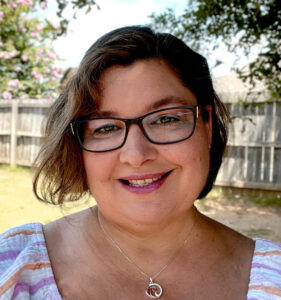
Nickie Cochran
Nickie Cochran started out writing sweet romances with a paranormal touch under her real name, then moved on to write clean and wholesome small-town romances under a pen name.
“There were several reasons for going with a pen name,” she said. “1) Nobody could ever spell my real name right, so searching my name was an issue. 2) I live in the southern US—the Bible Belt—so my small-town readers tend to be older, often Christian readers. Anything paranormal seems to put them off. (I've mentioned my ghostie books in my October newsletters for Halloween, but yeah, not much interest). 3) Also, although I'm very open about my different names, I found it best to separate the two.”
She added, “Yes, it’s double work, but not really for me, since my focus is on the small-town romances. The earlier ghostie books are really tough to market, so they are taking a backseat.”
Dave Holwill: Genre Clarity With a Personal Touch
Dave Holwill writes across genres but keeps both identities closely linked.
“I use two pen names that are very clearly related, as I don’t believe anybody just reads in one genre,” he said. “I write Rom-Coms as Dave Holwill and Folk Horror as D.A. Holwill (taking my cue from Ian (M.) Banks), and there is enough crossover between the two for me to run a joint newsletter for both.”
“Not everybody is on board for the two series,” he added, “but it’s easy enough for them to ignore the half of the newsletter that they’re not interested in.”
Mark David Gerson: One Voice, Many Forms

Mark David Gerson
Some authors don’t separate their genres or platforms at all—and that’s by design. Mark David Gerson, author of more than twenty books across fantasy, memoir, writing guides, spiritual nonfiction, and more, sees everything he does—writing, coaching, teaching—as part of the same calling.
“My brand is me. It’s not a genre,” he said. “Because I also teach, and all my books in one way or another are about the power of story and storytelling. So, my brand is, I’m a storyteller.”
Rather than divide his work into categories, he presents a unified identity that centers on creativity, authenticity, and the transformative power of story. “I teach basically people how to get through their books and find new ways of writing more easily and naturally and authentically,” he said. That mission, not a genre label, guides both his writing and his brand.
Howard Lovy: One Name, Integrated Voice
Some authors maintain one name across multiple genres and trust their audience to follow along—or skip what doesn’t interest them. That’s the case for Howard Lovy, who writes nonfiction and recently released a novel.
“Most of my Substack and social media followers signed on for my nonfiction work, but I’ve been promoting my fiction to that same audience,” he said. “Nobody’s complained, and my subscriber and follower counts continue to grow.”
Rather than splitting into separate brands, he presents a single, multifaceted author identity. “I think my audience knows to expect both fiction and nonfiction, and they can ignore or pay attention to any aspect of my author personality that they’d like.”
Thoughts or further questions on this post or any self-publishing issue?
 If you’re an ALLi member, head over to the SelfPubConnect forum for support from our experienced community of indie authors, advisors, and our own ALLi team. Simply create an account (if you haven’t already) to request to join the forum and get going.
Non-members looking for more information can search our extensive archive of blog posts and podcast episodes packed with tips and advice at ALLi's Self-Publishing Advice Center.