Wondering whether you need an ISBN for your self-published books, where to buy one, how many to buy, and how to use them? This guide covers everything, fully updated for 2026's publishing landscape, including current pricing and how ISBNs interact with today's distribution platforms.
Updated July 2026 | Originally published June 2016 | By ALLi Editorial
What Is an ISBN, and Do You Need One?
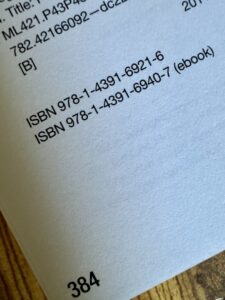
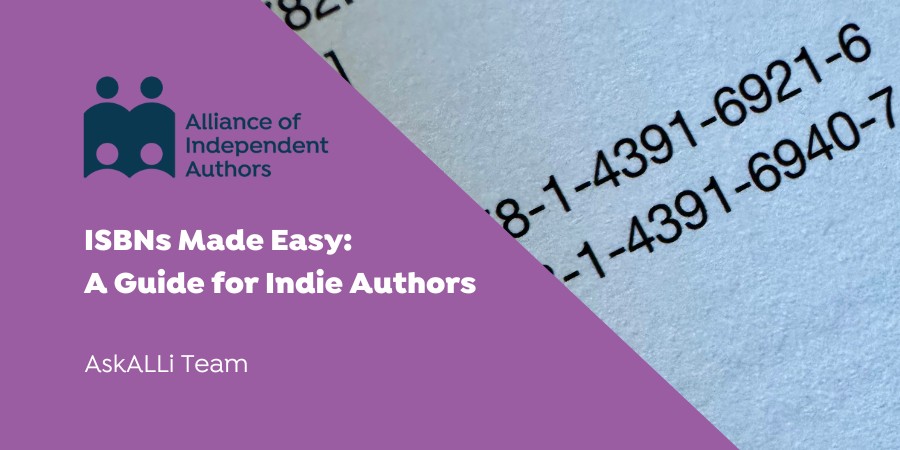
ISBN stands for International Standard Book Number. Its purpose is to give your book a universal ID, making it easy for bookstores, libraries, readers, and distributors to find or refer to your book.
Every ISBN consists of thirteen digits and is preceded by the letters ISBN when printed. The thirteen-digit number is divided into five parts, each separated by a hyphen:
- The current ISBN-13 prefix, “978” or “979.”
- A group or country identifier, marking a national or geographic grouping of publishers.
- A publisher identifier, marking a particular publisher within that group. The length of this segment also reveals how many ISBNs were purchased in that block: a six-digit publisher identifier means a block of 100, seven digits means a block of 10, and five digits means a block of 1,000.
- A title identifier, marking a particular title or edition.
- A check digit, the final number, which validates the whole ISBN through a mathematical formula.
Anyone familiar with how ISBNs work, a bookstore, agent, publisher, or librarian, can look at your publisher identifier and tell roughly how many ISBNs you purchased, and therefore whether you're likely a self-published author, a small press, or a larger publisher.
Do You Need an ISBN?
- Print books (paperback, hardcover): Required if you intend to sell through retail channels or bookstores.
- Audiobooks: Required for most distribution channels.
- Ebooks: Not legally required, but recommended for wider distribution. See the section below.
Situations Where You Need a New ISBN
- A different trim size or format of a print book (e.g. a 5×8 alongside a 6×9 edition).
- A large print edition.
- Each foreign-language translation.
- Any significant change to the text or content.
- A change in title.
- A change in binding type.
When You Don't Need a New ISBN
- A change of price.
- Minor corrections to text.
- A new cover design.
- Changing which printer produces your book.
Remember, once an ISBN has been issued, it can't be resold, reassigned, or transferred to another book or format. An imprint name can be changed, but the original purchaser remains listed as the publisher of record.
You've Got Your ISBNs Right. What Else Do You Need to be Aware Of?
ALLi's free guide will help you publish with confidence
Where to Buy ISBNs
In the US, Bowker is the sole official ISBN agency, via myidentifiers.com. Current 2026 pricing:
| Quantity | Price | Per-ISBN cost |
|---|---|---|
| 1 | $125 | $125.00 |
| 10 | $295 | $29.50 |
| 100 | $575 | $5.75 |
| 1,000 | $1,500 | $1.50 |
In the UK, ISBNs come from Nielsen (nielsenisbnstore.com). A single ISBN costs around £89, with better per-unit pricing on blocks of 10 and above.
Elsewhere, many countries provide ISBNs free through a government library system or national ISBN agency. Canada is a well-known example. Use the International ISBN Agency's directory to find your national agency.
If you buy in bulk, the decision point isn't “do I need 10 or 100 now,” it's “will I ever need 11, or ever need 101.” If you're a prolific author publishing across multiple formats (print, ebook, audio) and languages, the larger blocks pay for themselves quickly. A single title in three formats already uses three ISBNs; add a large print edition, a translation, or a second binding, and the count climbs fast.
Do not pay extra for a barcode. A barcode is generated directly from your ISBN, and free tools exist to create one; you don't need to buy one from a reseller.
Free ISBNs from Distribution Platforms
Amazon KDP, IngramSpark, and Draft2Digital all offer free ISBNs as part of their onboarding. These come with real trade-offs:
- The platform is listed as the publisher of record, not you or your imprint.
- The ISBN can typically only be used within that platform. If you later want to distribute the same edition elsewhere, you'll need to purchase a separate ISBN and effectively republish under it, losing any accumulated reviews and sales history tied to the original listing.
- Some independent bookstores are wary of stocking books where a retail platform is listed as publisher. This isn't universal, but it's worth knowing if brick-and-mortar distribution matters to your strategy.
The core recommendation from ALLi remains: if you're publishing for the long term and want to be recognised as your own publisher of record within the wider book trade, buy and use your own ISBNs from Bowker, Nielsen, or your national agency.
One ISBN, Many Distributors
A properly purchased ISBN is yours to use across every platform and retailer, not tied to any single distributor. Use the same ISBN for the same format of a book regardless of which platform sells it; Amazon, Apple, Kobo, and your own website can all use one ISBN for your ebook, and one for your paperback.
Where this gets confusing is with aggregators. Draft2Digital (which acquired Smashwords in 2022, so the two now operate as one company) and similar aggregator services will offer to assign you a free ISBN if you don't provide your own. As with platform-specific ISBNs above, an aggregator-assigned ISBN is generally only valid for use through that aggregator's own distribution network. If you later move to a different aggregator or distribute direct, you'll need a new ISBN for that edition, which fragments your reviews and sales history across multiple product listings for what is, to a reader, the same book.
The simplest fix: buy your own ISBN once and provide it to every platform and aggregator you use. It costs a little more upfront but avoids exactly this fragmentation.
You've Got Your ISBNs Right. What Else Do You Need to be Aware Of?
ALLi's free guide will help you publish with confidence
Libraries and OverDrive
Libraries remain a real and growing distribution channel for indie authors, not a relic of print-only publishing. OverDrive is the largest supplier of ebooks and audiobooks to libraries and schools worldwide, and it requires an ISBN for any title distributed through its network. Indie authors typically reach OverDrive through an aggregator such as Draft2Digital, which supports OverDrive as one of its distribution channels.
If you skip ISBNs entirely for your ebooks, you cut off library distribution as an option. Whether that trade-off matters to you depends on your genre and goals: some indie authors build meaningful discoverability and reader relationships through library lending, while others focus entirely on direct retail sales.
A Note on GPSR (EU Sales)
If you sell physical books into the EU, the General Product Safety Regulation (in force since December 2024) requires manufacturer and EU-representative contact details to appear on your book, typically on the copyright page rather than the ISBN itself. The ISBN satisfies GPSR's separate requirement for a unique product identifier, but it does not replace the contact-information requirement. See ALLi's guide to creating your copyright page for the specific wording needed.
The Bottom Line
Whether to use your own ISBNs, a free platform-assigned one, or none at all for your ebooks is a personal decision that depends on your budget, your long-term publishing strategy, and how much you value being recognised as your own publisher of record.
What hasn't changed since ISBNs became standard: they cost relatively little if you buy in a sensible-sized block up front, they make you look professional to bookstores, libraries, and industry databases, and they keep your reviews, sales history, and metadata consolidated under one identity rather than fragmented across every platform you happen to distribute through.
You've Got Your ISBNs Right. What Else Do You Need to be Aware Of?
ALLi's free guide will help you publish with confidence
Alliance of Independent Authors
The global non-profit association for indie authors
ALLi members get all guidebooks free, personalised advice, and access to a community of thousands of working indie authors. If you're serious about selling more books, membership is your next step.