



Book Design for Self-Publishers: Creating a Professional, Market-Ready Book
Design encompasses both your book’s cover and its interior. Together, they shape how your book is discovered, experienced, and judged by readers.
Your cover is the first thing a reader sees. It functions as the book’s billboard; signalling genre, quality, and professionalism at a glance, and acting as the primary touchpoint that encourages a reader to take the first step towards making a purchase.
Your interior design is where that first impression is either confirmed or undermined. Clean typography, clear layout, and thoughtful formatting help readers take your book seriously and stay immersed in the reading experience.
For self-publishers, design isn’t cosmetic. It affects discoverability, readability, sales, and how your work is perceived over time. Strong design choices help your book stand confidently alongside other professionally published titles.
This page walks you through the book design process: what cover and interior design involve, why each matters, and how to make design choices that help your book look professional, readable, and ready for publication.
Want to become a successful indie author?
Here are the 13 Things Every Indie Author Needs to Know About Self-Publishing
Frameworks, mindset shifts, and foundational principles that make every publishing decision clearer
Understanding the Role of Book Design
Professional book design balances artistry with practicality. It must capture attention, reflect genre expectations, communicate the book’s value and ensure effortless reading flow. Good design disappears into the experience; poor design distracts from it.
Many self-publishers underestimate how much design shapes first impressions. In the US market, where thousands of new titles are released daily, a subpar cover or inconsistent layout is often all it takes for a reader to click away. Investing in design is effectively investing in your book’s credibility.
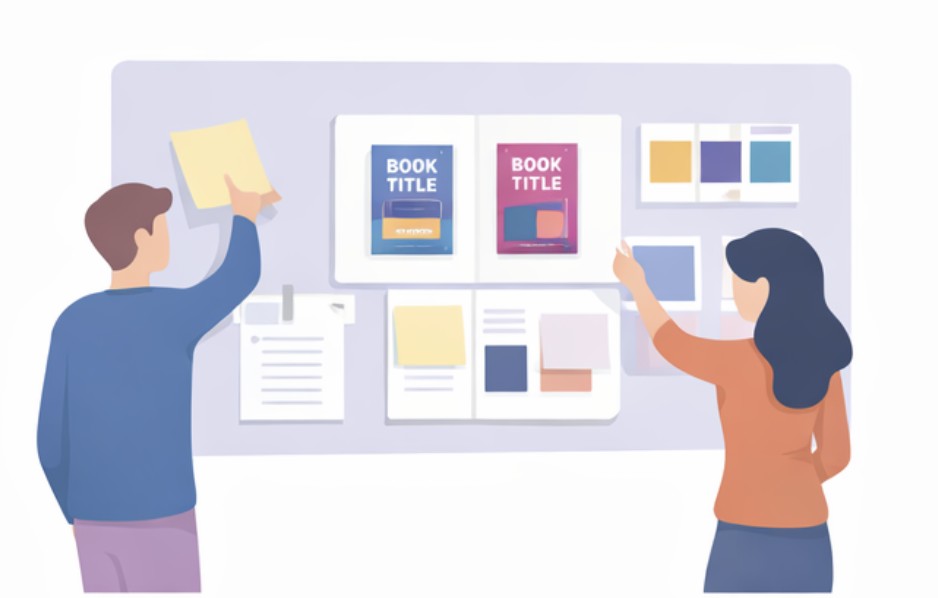
Cover Design: Your Most Powerful Marketing Asset
Your cover is your book’s first salesperson. On Amazon, where most US readers browse at thumbnail size, it must be instantly recognisable, visually clear and genre-appropriate.
Key elements of a professional cover include:
- A strong central concept that communicates tone and promise
- Genre-aligned visuals that position the book accurately
- Legible typography that reads well in small sizes
- High-quality imagery or illustration
- Balanced composition that draws the eye naturally
A fiction cover should evoke emotion and atmosphere, while nonfiction covers typically emphasise clarity, boldness and authority. Typography carries just as much weight as imagery. Serif fonts often suit historical or literary genres, while cleaner sans-serif fonts suit modern nonfiction and contemporary fiction.
In the US market, conventions are well-defined. Romance covers often lean into character-focused imagery and warm tones, thrillers favour stark contrasts, while business books use strong colour blocks and bold type. Study your competitive landscape before commissioning or creating a design.
Creating Clean, Readable Interior Layouts
Interior design affects how comfortably readers engage with your book. Even strong writing can feel difficult to read if spacing is inconsistent, margins are too tight, or chapter breaks feel awkward.
Good layout design includes:
- Page margins that prevent overcrowding
- Comfortable line height for readability
- Consistent paragraph styles
- Clear hierarchy for headings and subheadings
- Well-placed page numbers, running heads and section markers
The interior must be adjusted for each format. US trade paperbacks typically follow different trim sizes, spacing conventions and text flow patterns than those used in the UK or Europe. Reflowable eBook formatting requires its own approach, prioritising flexibility over fixed design.
For nonfiction, visual variety matters: callout boxes, charts, illustrations and tables need careful placement so that they support rather than interrupt the narrative.
Typography That Enhances the Reading Experience
Typography influences tone, readability, and long-term reading comfort. Effective typography considers more than font choice alone; it includes spacing, contrast, and how typefaces work together.
Important considerations include:
- Choosing fonts that match genre conventions
- Using no more than two complementary typefaces
- Ensuring chapter titles, subheadings and body text feel unified
- Adjusting kerning, leading and tracking for a smoother reading experience
Matching typography to format is essential, ensuring that each piece feels appropriate to its purpose, is easy to read in its intended context, and meets reader expectations across print and digital.

Illustrations, Images and Graphic Elements
Images can elevate both fiction and nonfiction when used purposefully. They must be high resolution and properly formatted for print and digital environments. In the US market, interior images for print should be at least 300 dpi; screens can accommodate lower resolutions, but clarity remains essential.
Illustration styles should enhance tone and align with audience expectations. Children’s books, cookbooks, self-help titles, and academic works all have distinct visual norms. Clear file naming, correct embedding and consistent styling across chapters help maintain a cohesive look throughout the book.
Preparing Files for Print and Digital Formats

Once your design is complete, you’ll need to prepare final files using the appropriate specifications for each platform. For print, most self-publishers work with Amazon KDP, IngramSpark, or both. Each has different bleed allowances, colour profiles, and spine width requirements.
Typical tasks include:
- Exporting print-ready PDFs with embedded fonts
- Ensuring full-bleed pages are correctly sized
- Adjusting the spine width based on final page count
- Creating separate files for eBook formats (EPUB, MOBI or KPF)
- Checking image resolution and colour profiles (CMYK for print, RGB for digital)
eBook preparation involves additional factors like reflowable text, hyperlinking, navigation, and responsive design. The same book often requires two or three different file outputs to meet platform requirements.
Branding Consistency Across Your Author Catalogue
For authors publishing multiple books, consistent design choices help build recognition and reader trust. Repeating visual elements strengthens brand identity, particularly in series-driven genres.
Individual series should still be clearly differentiated. Covers and interior design need to make it obvious which books belong together, without introducing wildly different styles across an author’s catalogue.
Independent authors have a clear advantage here. With full control over design decisions, they are better placed than traditionally published authors to create a cohesive, recognisable catalogue across multiple books and series.
Want to become a successful indie author?
Here are the 13 Things Every Indie Author Needs to Know About Self-Publishing
Frameworks, mindset shifts, and foundational principles that make every publishing decision clearer
Working With Professional Designers
In an era of AI tools and easy-to-use design software, it can be tempting to attempt to create your own cover. However, professional designers bring market knowledge, technical expertise, and creative insight. A good designer understands genre expectations, platform requirements, and production standards.
Look for designers who:
- Specialise in book design rather than general graphic design
- Have clear experience with Amazon KDP, IngramSpark and US trade standards
- Provide multiple concepts and revisions
- Offer both cover and interior services
- Understand metadata and how design affects sales performance
A collaborative relationship produces the best results. Authors should come prepared with comparable titles, mood boards, genre research and a clear sense of their audience.

Final Checks Before Publication
Strong book design is about more than visual appeal. It brings together your cover, which attracts attention and signals professionalism, and your interior, which confirms quality through clarity, consistency, and readability. When these elements work together, they shape how seriously readers take your book, how confidently it stands alongside other titles, and how smoothly it moves into production and distribution.
Before publication, a final design review helps ensure that both the cover and interior deliver on that promise. This last stage is about confirming that the design choices you’ve made translate cleanly into finished files, across formats, and in the physical world where readers will experience them.
Before submitting your files, carry out a complete design review:
- Check alignment and spacing across all pages
- Review chapter headings for consistency
- Ensure images, tables and charts display correctly
- Verify the copyright page, ISBN, and front/back matter follow US norms
- Order proof copies for physical review
A proof review remains the most valuable step. Digital previews can miss subtle alignment issues or unexpected trimming errors that only appear in print.
JOIN ALLI: SUPPORT AT EVERY STAGE
The Alliance of Independent Authors (ALLi) exists to educate, empower, and advocate for self-publishing authors worldwide.
We provide trusted guidance, practical resources, and independent ratings to help our members make informed decisions at every stage of publishing.
To learn more about ALLi and the support available through membership, visit our website.