



Publishing independently gives you creative control, but it also places the responsibility for a polished, professional manuscript firmly in your hands. The quality of your editing often determines whether readers finish your book, recommend it to friends, or move on after the sample pages.
For many authors, this responsibility can feel daunting at first. Editorial work isn’t about stripping away your voice or fixing something that’s “wrong”. It’s about strengthening what’s already there so your book communicates clearly and confidently with its readers.
This page offers a clear, grounded introduction to the editorial work that underpins every professionally published book, whether traditionally published or independently released. It’s designed to help you understand what editorial work really involves, why it matters, and how it fits into the wider picture of publishing your book.
Want to become a successful indie author?
Here are the 13 Things Every Indie Author Needs to Know About Self-Publishing
Frameworks, mindset shifts, and foundational principles that make every publishing decision clearer
Why Editorial Quality Matters More Than Ever
Readers today have access to millions of books. Discovery algorithms, online reviews, and retailer previews mean your first chapters are often judged instantly. At ALLi, we see strong editorial foundations as central to self-publishing with excellence, giving readers a professional experience and authors their best chance to connect.
- Improves clarity, pace, tone, and consistency
- Strengthens your author voice rather than changing it
- Prevents negative reviews due to simple errors
- Gives designers and production teams a clean, workable manuscript
- Builds long-term trust with your audience
Whether you are writing fiction, memoir, business books, or educational material, editing is the step that transforms an early draft into a credible publication.
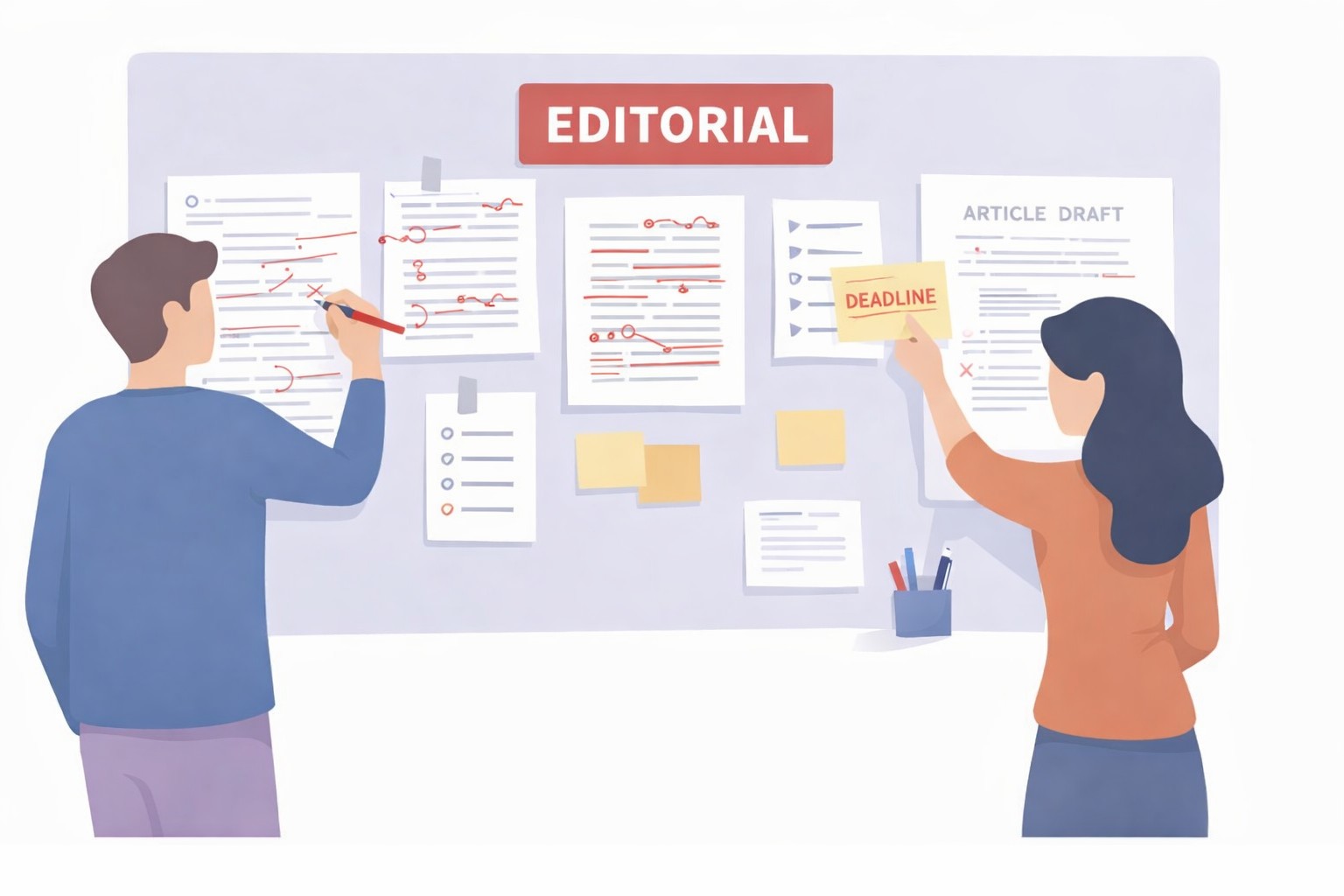
The Key Editorial Stages
Self-publishing authors typically work through three main editorial stages: developmental editing, line editing and copy-editing, followed by proofreading. Each plays a distinct role in shaping a professional, reader-ready book.
Not every author tackles these stages in a single pass, and many return to them more than once as a manuscript evolves. What matters is understanding what each stage is for, and choosing what your book genuinely needs at any given point.
Ideally, these stages are handled by different people with different skillsets. A developmental editing needs distance and big-picture clarity to assess the work as a whole, while line and copy-editors focus on precision at sentence level, and proofreaders at word level. Trying to combine these perspectives, or to apply them all to your own work at once, can be difficult when you’re too close to the material.
We recognise, however, that professional editorial support can be a significant investment. While this ideal approach delivers the strongest results, there are practical workarounds for authors working with limited budgets, explored in our low- and no-budget editorial guidance in the links below.
Developmental Editing
Developmental editing focuses on the big picture: structure, logic, character development, clarity of message, chapter flow, and overall reader experience. It is the stage where major improvements are made.
A developmental editor may comment on:
- Whether your ideas are presented in a coherent order
- Gaps, repetition, or unclear arguments
- Character arcs, pacing, tension, or emotional resonance (fiction)
- Tone, depth, expertise, and narrative drive (non-fiction)
This is often the most transformative part of the editorial journey. Many authors describe it as a professional conversation about the book’s purpose and impact, rather than a simple edit. A developmental edit is great opportunity to crack open the ideas you’ve put on the page; to re-examine, reorient, and clarify what you’re truly trying to say.
For reasons of time, budget, or confidence, some authors skip this stage. At ALLi, we recommend embracing it where possible. Few authors regret investing in a strong developmental edit, and many describe it as the turning point at which their draft truly becomes a manuscript.
Line Editing
Line editing takes a closer look at the language itself. The editor examines your prose line by line, refining how the writing sounds, moves, and engages the reader. This stage enhances your voice without rewriting your work.
Line editing covers:
- Sentence rhythm and flow
- Word choice and clarity
- Reducing unnecessary words or awkward phrasing
- Strengthening transitions
- Ensuring tone remains consistent across chapters
Line editing focuses on the texture of the writing itself. It’s about how your sentences move, how ideas connect, and how your voice comes through on the page.
Rather than reshaping the book, a line edit sharpens it; smoothing awkward phrasing, tightening language, and strengthening flow so the writing feels confident, consistent, and engaging from start to finish.

Copy Editing
Copy-editing is technical, precise, and essential. This is where the editor checks every detail for accuracy, consistency, and correctness before the manuscript enters production.
A copy-editor reviews:
- Grammar, spelling, punctuation, and syntax
- Consistent use of terminology and stylistic conventions
- Factual accuracy and timeline logic
- Formatting and layout within the manuscript
- Compliance with house style (if you have one)
This stage ensures professionalism and reliability, both of which directly affect reader trust and the overall reading experience, particularly in the early pages where impressions are formed quickly. In practice, a good copy-edit often includes elements of line editing, addressing clarity and flow at sentence level as well as technical accuracy.
For authors expanding into the US market, a copy-editor can also adapt the manuscript for American English conventions if desired, or maintain a clean British English standard while ensuring clarity for international readers.
Proofreading
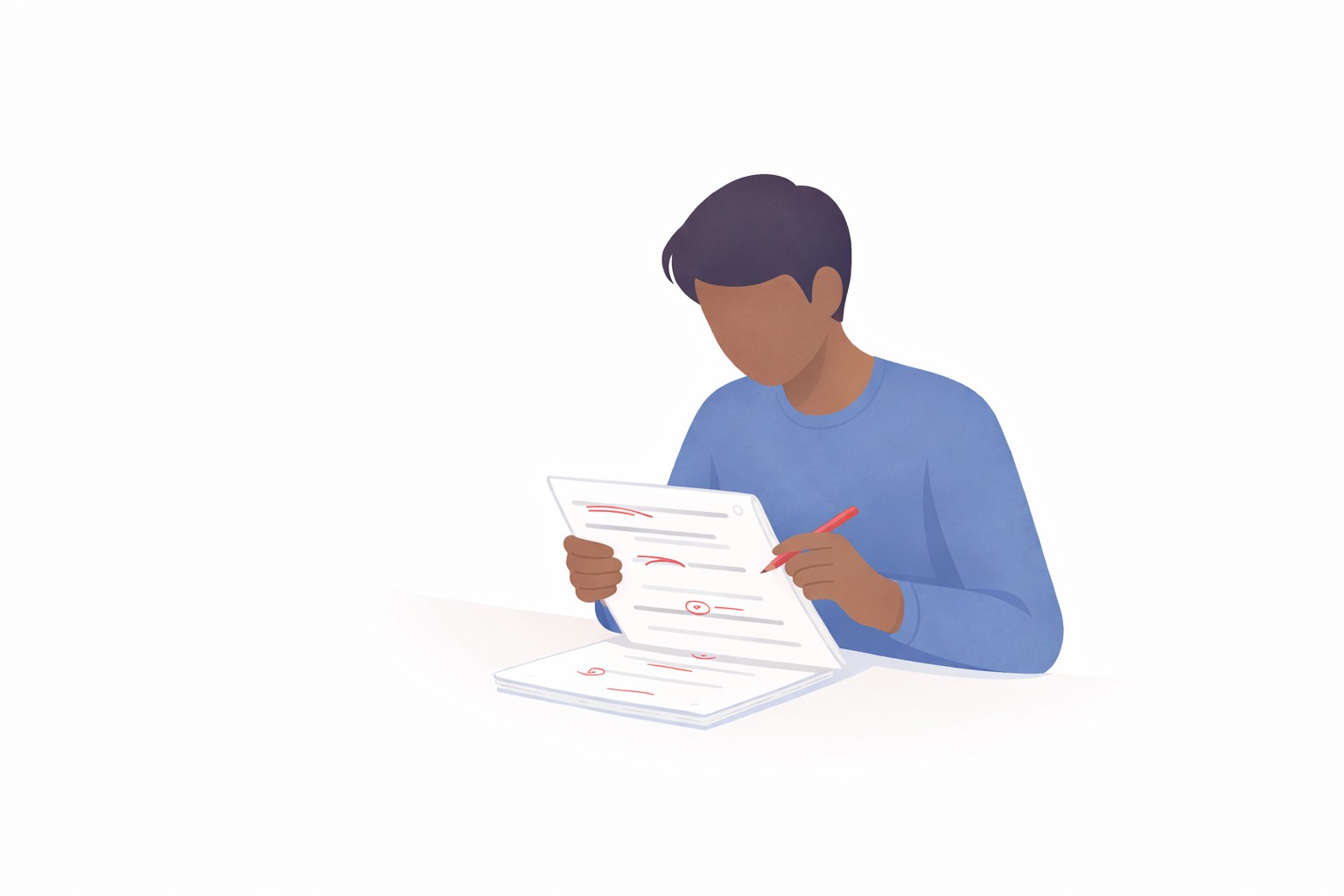
Proofreading is the final safety check carried out once the book has been typeset. It is not a substitute for editing. Instead, it is a final review to catch:
- Typographical mistakes
- Incorrect page numbers or headers
- Design inconsistencies
- Final formatting errors
This is the last stage before print or ebook release. Many authors choose to hire a separate proofreader to ensure a fresh pair of eyes.
How to Prepare Your Manuscript for Editing
Your editor will deliver the best results when you prepare your manuscript properly. Taking time to get your draft into good shape allows the editorial process to focus on clarity, craft, and reader experience — and helps ensure you’re making the most of your editorial investment.
Before submitting your draft, it’s best to:
- Complete your self-revision
Read the manuscript aloud, trim obvious filler, resolve known plot holes, and check that your argument or narrative flows logically.
- Provide a brief author summary
Let your editor know your goals, audience, and concerns. For the US market, mention whether American spelling and grammar should be applied.
- Use simple, consistent formatting
No complex fonts or layouts. A clean Word document with standard margins is ideal.
- Ask for a sample edit
This helps ensure the editor’s style aligns with your expectations.
Good preparation makes the process smoother and more cost-effective. For practical guidance on revising your own work before hiring an editor, see the link at the bottom of this page.
Choosing the Right Editor
Editors vary in experience, specialisation, and approach. When choosing one:
- Look for editors who regularly work in your genre
- Check their training, qualifications, and portfolio
- Ask whether they understand US publishing standards, metadata, and retailer expectations
- Review testimonials, sample edits, and communication style
The right editor should improve your manuscript while respecting your voice. Clear communication is essential throughout the process. Often, you’ll recognise a good fit quickly, a good match understands your work, sees what you’re trying to achieve, and responds to it thoughtfully. If it doesn’t feel right, it’s fine to step away and try someone else.
Many authors go on to work with the same editor across multiple books, sometimes for years. When the relationship works, it tends to deepen over time, supporting both the writing and the writer.
Want to become a successful indie author?
Here are the 13 Things Every Indie Author Needs to Know About Self-Publishing
Frameworks, mindset shifts, and foundational principles that make every publishing decision clearer
Common Mistakes Authors Make (and How to Avoid Them)
Many self-publishers accidentally undermine their book’s potential by rushing the editorial stage. The most frequent pitfalls include:
- Editing too early in the writing process
- Skipping developmental editing because it feels uncomfortable
- Relying only on proofreading tools
- Assuming beta readers replace professional editors
- Hiring a single editor for all stages without checking expertise
- Not allowing enough time between drafts
Avoiding these mistakes allows the editorial process to do what it’s meant to do: strengthen your book at every level. When editing is approached with clarity, time, and the right support, it becomes the foundation for everything that follows.
JOIN ALLI: SUPPORT AT EVERY STAGE
The Alliance of Independent Authors (ALLi) exists to educate, empower, and advocate for self-publishing authors worldwide.
We provide trusted guidance, practical resources, and independent ratings to help our members make informed decisions at every stage of publishing.
To learn more about ALLi and the support available through membership, visit our website.